
Culture
Temples, Churches and Culture in Bang Rak
Bang Rak holds Buddhist, Catholic, Muslim and Hindu communities within a short walk of one another. That density is the district’s most distinctive quality and the one most easily handled badly.
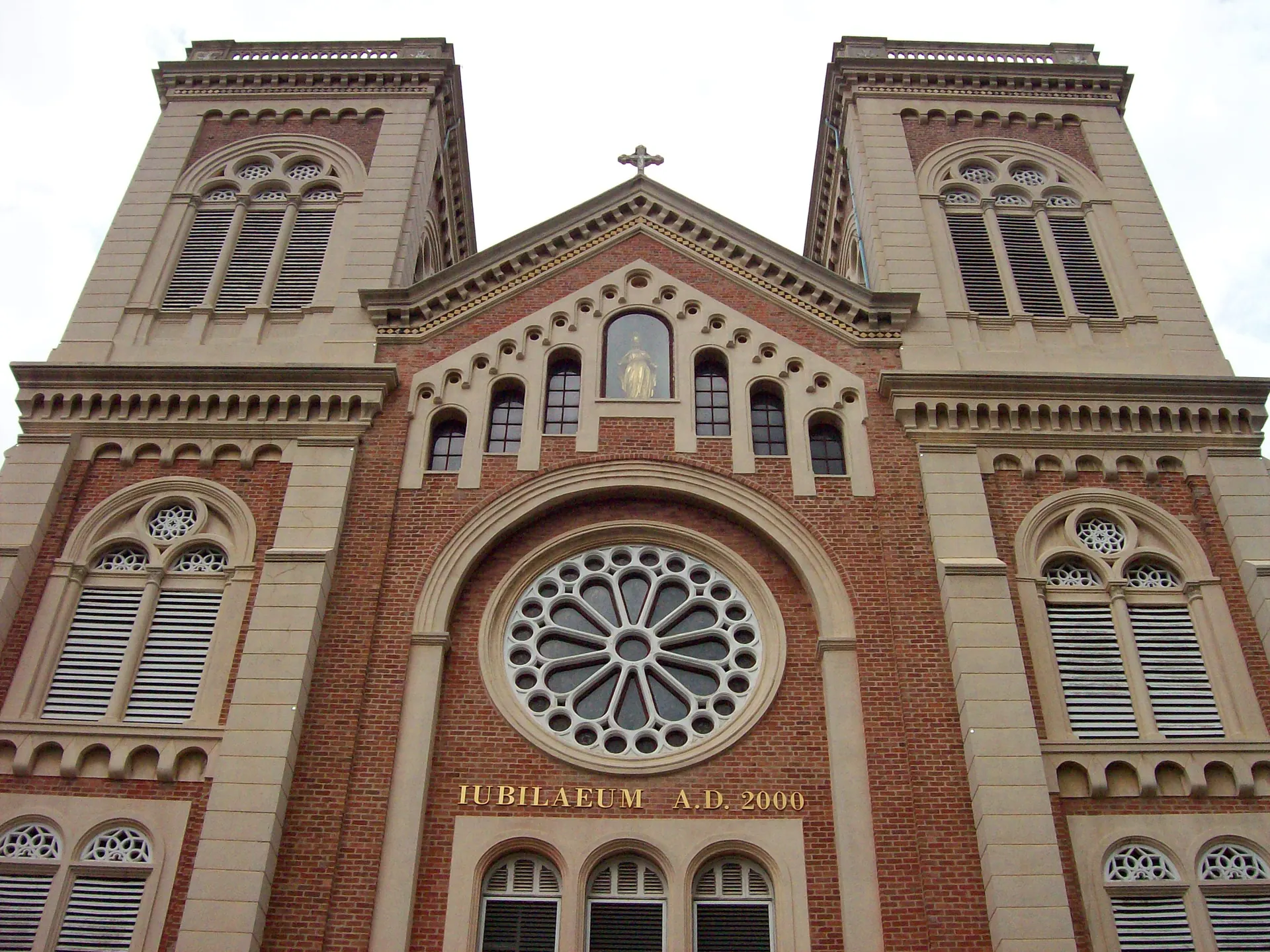
What makes Bang Rak unusual is not any single building. It is that communities of several different faiths settled in the same small area, built there, and are still there — so within a short walk you can pass a Buddhist temple, a Catholic cathedral, a mosque and a Hindu temple, each with a living congregation. This guide is about how to see that honestly, which mostly means remembering that none of it was built for you.
Why they are all here
Trade. This stretch of the city handled foreign commerce for well over a century, and the communities that came for the trade — Chinese, Indian, Muslim, European — settled near the river and near the road. The Tourism Authority of Thailand still characterises this as an old riverside neighbourhood known for its Chinese and Muslim food, which is the same history showing up in the kitchens rather than the architecture.
The buildings followed the communities, not the other way round. That is why they are clustered rather than distributed: they are where the people who built them lived and worked.
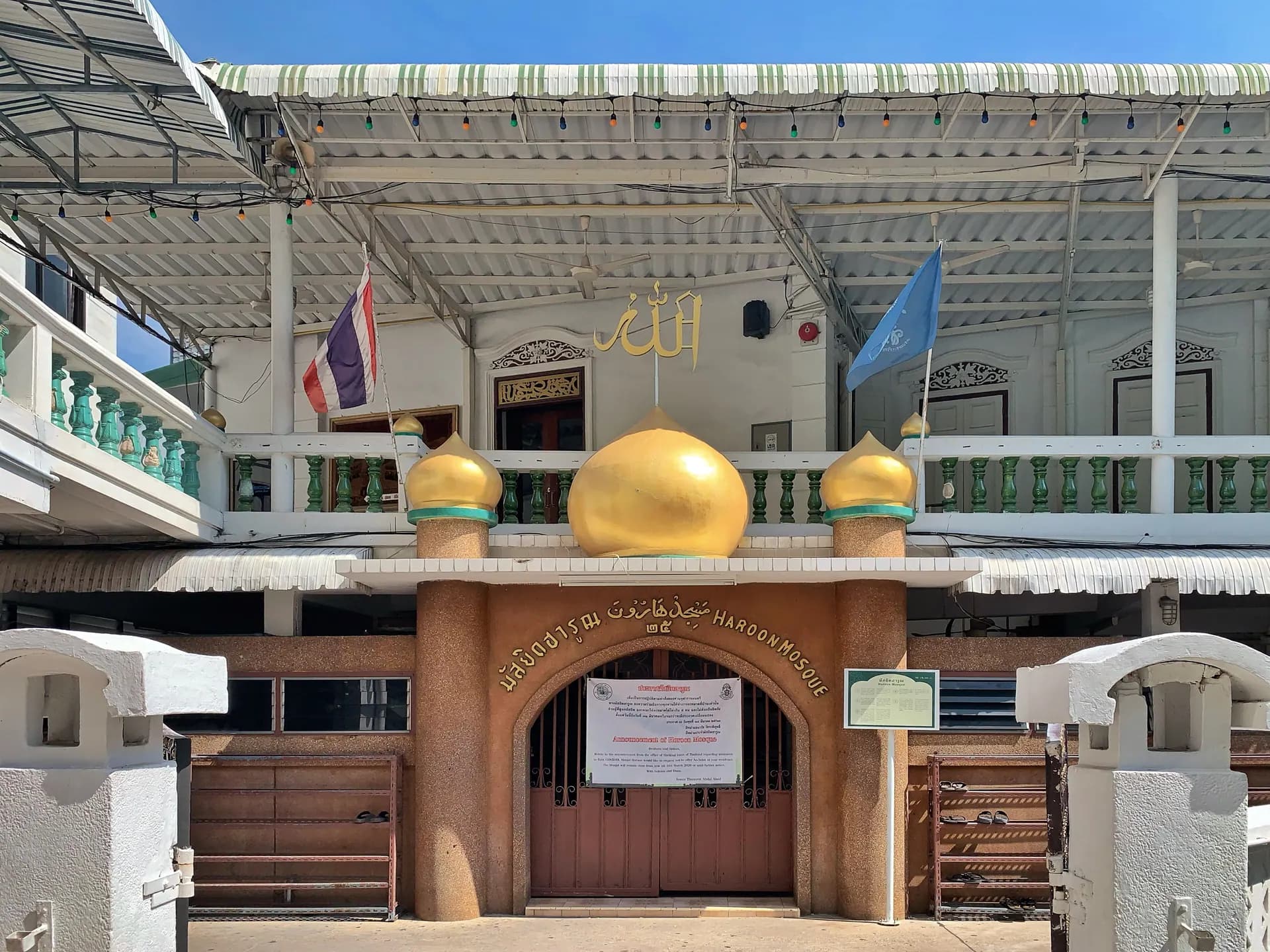
One of Bangkok's Muslim communities keeps a mosque, Haroon Mosque, tucked down a soi off Charoen Krung near the river — a working place of worship, not a monument, and one of several distinct faith traditions that settled in this stretch of the district.
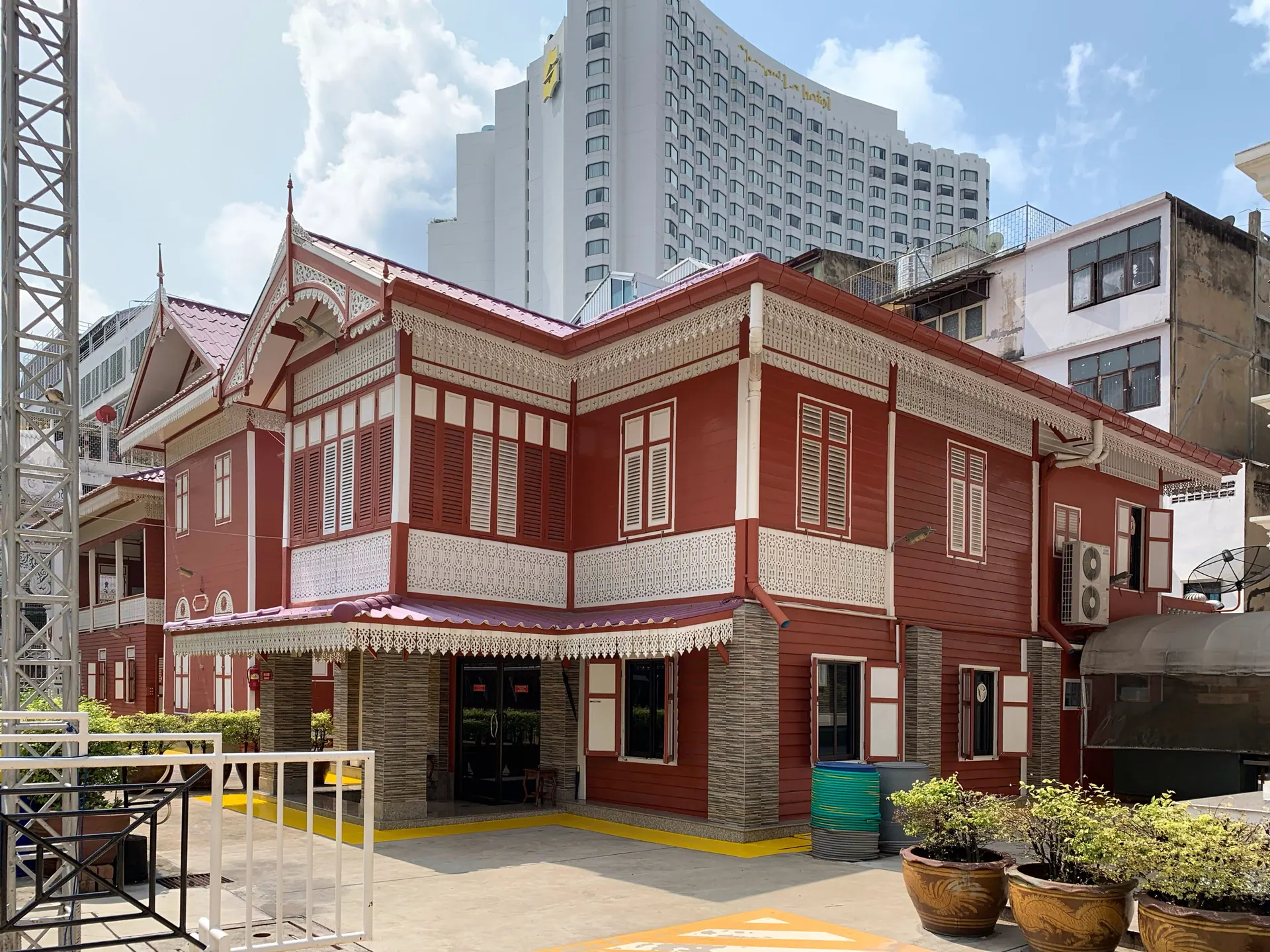
The Buddhist thread is here too, in quieter form: Wat Suan Phlu, a working neighbourhood temple off Charoen Krung, keeps to its own daily rhythm of chanting and merit-making, largely unremarked by the tourist traffic that passes through the city's larger temple complexes.
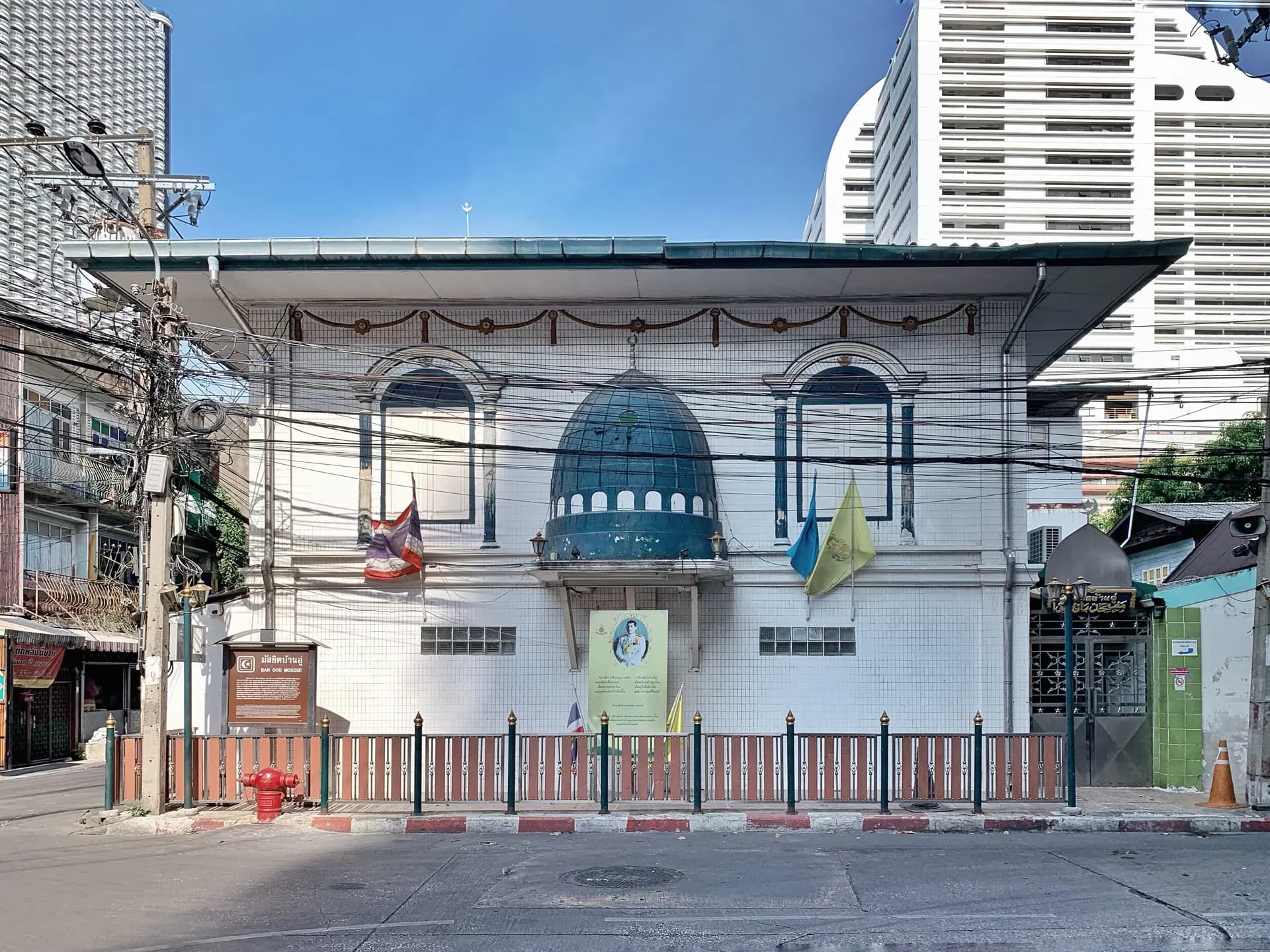
Visiting well
These are working religious buildings. Some welcome visitors warmly, some tolerate them, and some are simply not open. All of that is the congregation’s decision and it can change from day to day and hour to hour.
Culture beyond the religious buildings
The same history is legible in less obvious places. The food is the clearest: the tourism authority associates this neighbourhood with both Chinese and Muslim street food traditions, and those kitchens are the descendants of the communities that built the temples and mosques. The commercial streets carry it too — specialist trades that arrived with particular communities and stayed.
If you want one recommendation rather than a list: walk the district slowly on a weekday morning, when it is working rather than performing. The culture of Bang Rak is not staged anywhere, which is exactly why it is worth the attention.
A district where four faiths keep congregations within a few streets of each other is not a coincidence of planning. It is a record of who traded here.
Sources and fact review
Every claim below is traceable to a named source. Items marked volatile — opening hours, fares, routes and exhibition schedules — change without notice and are rechecked before publication rather than presented as permanent.
Charoen Krung is a 150-year-old road and an old riverside neighbourhood, historically known for Chinese and Muslim street food and hotels, now known as a "Creative District"; the Thailand Creative & Design Centre relocated its headquarters to the Grand Postal Building there; art spaces lie within about a kilometre of it, including Serindia Gallery (Soi 36), Warehouse 30 (Soi 30), Most Gallery (Soi 28), Speedy Grandma and the Soy Sauce Factory (Soi 24).