
Jewelry District
Bangkok's Jewelry District: Gems, Craft and Trade in Bang Rak
Bangkok’s gem trade is based in a few Bang Rak blocks. This guide sets out what public records show is there — a trade centre, a trade association, a public institute, a school, laboratories — what those records do not explain, and how to read the district without mistaking it for a shopping guide.
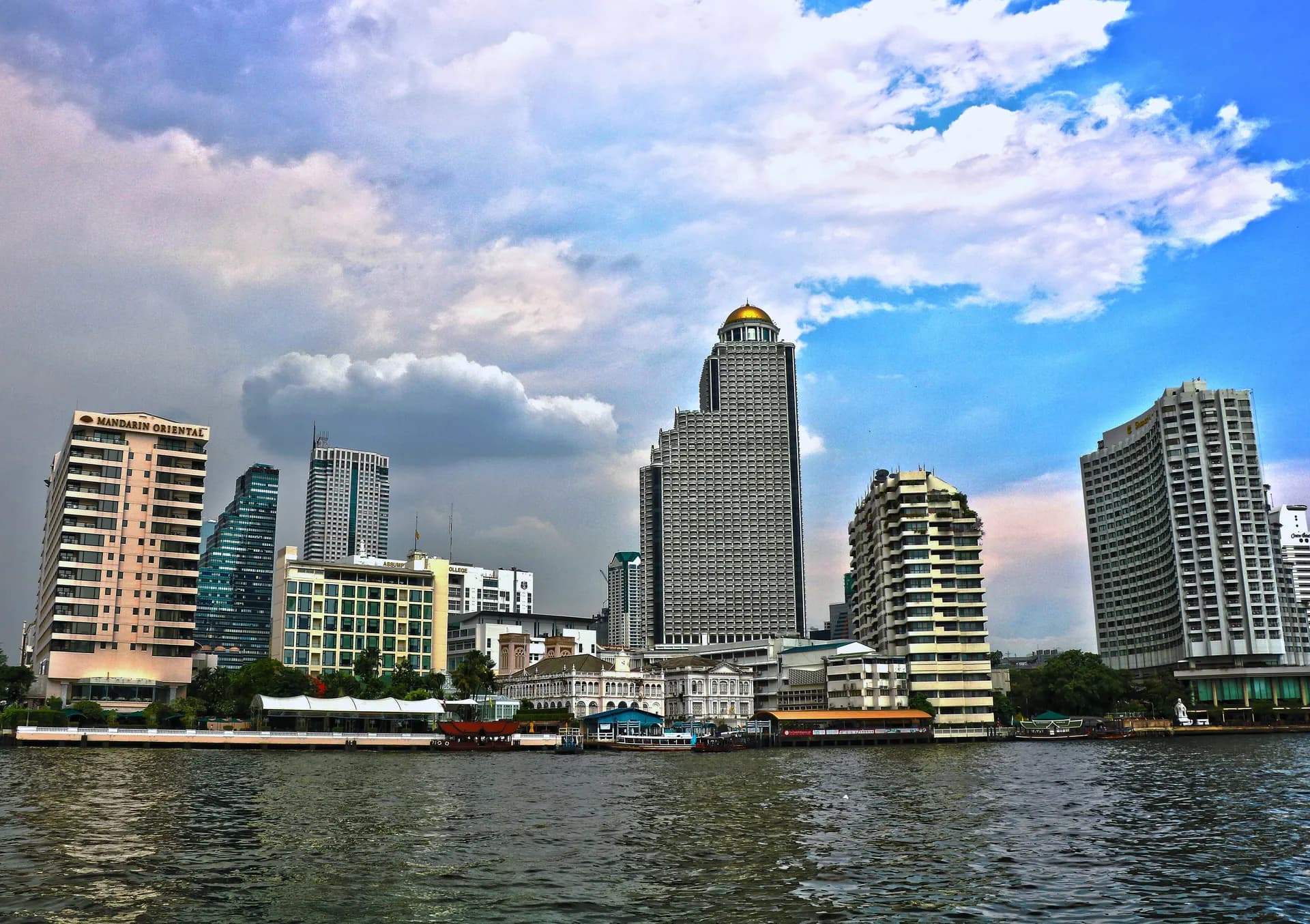
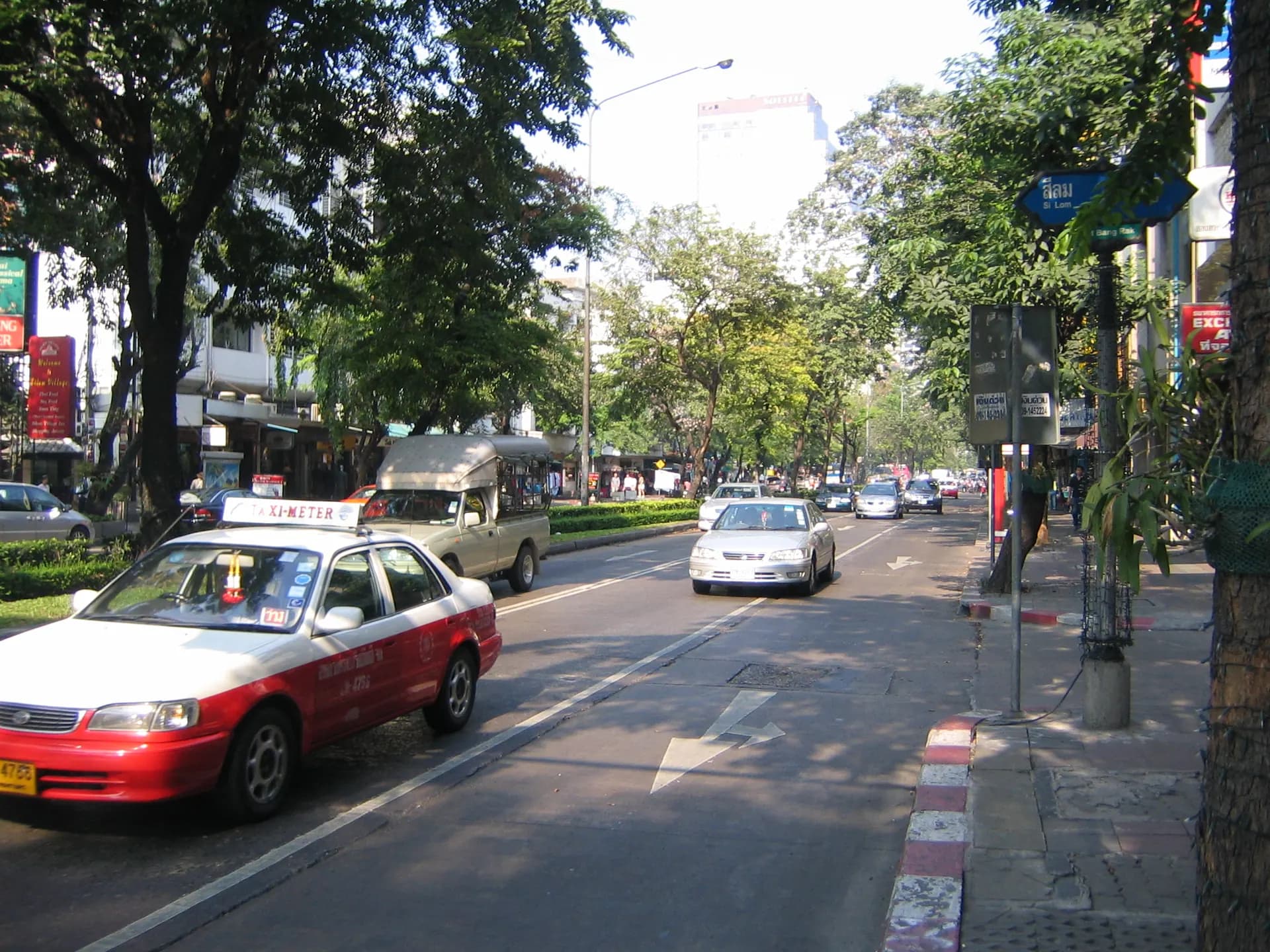
Bangkok’s gem trade is not spread across the city. It is based in Bang Rak, around the meeting of Silom Road and Mahesak Road, in and around one very large building. The International Gem Society calls Bang Rak the city’s gemstone-trading neighbourhood and puts the Jewelry Trade Center on Silom Road near its intersection with Mahesak Road; the centre handles diamonds, precious gems, rough stones and jewellery. Little of it is arranged for visitors, and that is the honest starting point for anyone reading this.
Where the district actually is
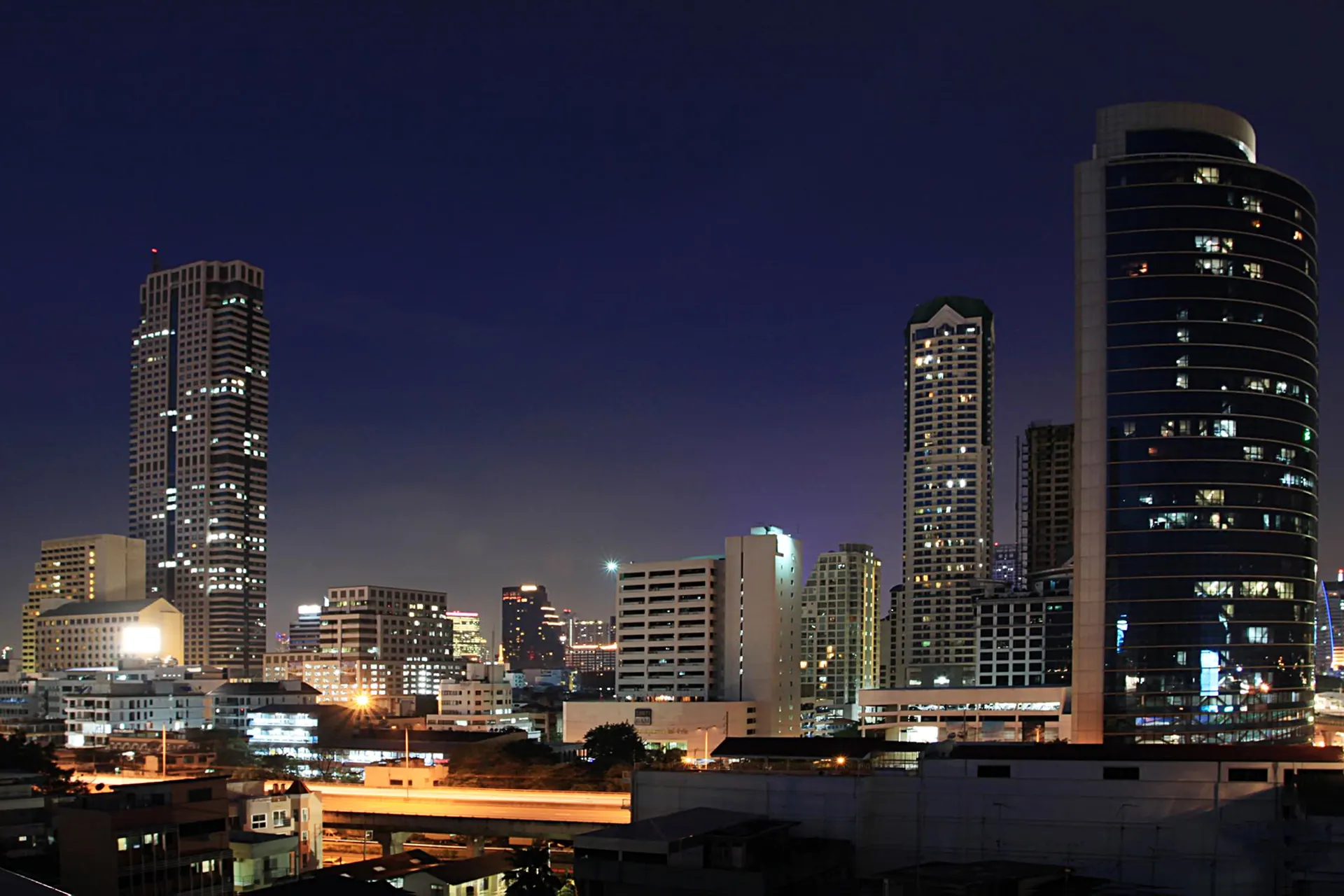
The trade sits at the Silom end of Bang Rak district, not down by the river. Its most visible landmark is the Jewelry Trade Center (JTC) on Silom Road, which describes itself as trade premises — retail, office and residential space in one complex — rather than a shopping mall. Its figures, repeated by the Ministry of Commerce’s trade-fair site, are more than 300 retailers and 1,500 wholesalers.
- The Jewelry Trade Center
- On Silom Road near the Mahesak Road intersection. By its own description more than 180,000 square metres of retail, office and residential space, hosting more than 300 retailers and 1,500 wholesalers.
- The trade association
- The Thai Gem and Jewelry Traders Association, founded on 28 December 1974. Its headquarters have been on the 52nd floor of the JTC Tower on Silom Road since 2001.
- The public institute
- The Gem and Jewelry Institute of Thailand (GIT), a public organisation under the Minister of Commerce, established by royal decree in 2003. It analyses and certifies gems and jewellery, does research, trains people, gathers trade data and coordinates government and industry. Its address is the ITF Tower on Silom Road, in Suriyawong subdistrict. It also runs a Gem & Jewelry Museum, for which its site publishes admission fees.
- The school
- The Asian Institute of Gemological Sciences (AIGS), founded in 1978, runs a school and a laboratory on the 48th floor of the JTC.
- The laboratories
- JTC’s own website lists seven gem laboratories among its tenants. That is a statement about who rents space there, by the building’s owner; it is not an endorsement of any of them.
- The other schools
- The International Gem Society counts four gemmological schools — AIGS, GIA, Gem-A and IGT — within roughly two kilometres of one another in Bang Rak.
- The trade fair
- The Bangkok Gems & Jewelry Fair, organised by the Department of International Trade Promotion (with GIT since 2022), has been held since 1983 and now runs every February and September. The 2026 edition was held at the Queen Sirikit National Convention Center.
Why here? What the records do and do not say
What is documented
- The trade association began in 1974 in a private house on Rama I Road, moved several times — including to Rama IV Road — and reached the JTC Tower on Silom Road in 2001, according to its own history.
- GIT began in 1998 as a joint project of ministries, the trade association and Chulalongkorn University, which gave it ten years’ use of a faculty building for testing. It became a public organisation by royal decree in 2003, and its address today is on Silom Road.
- AIGS was founded in 1978 and today describes itself as based in “the heart of Bangkok’s jewelry district” at the JTC.
- The Ministry of Commerce has organised the Bangkok Gems & Jewelry Fair since 1983.
- Most cutting and enhancement is elsewhere. The Department of International Trade Promotion says around 80% of exported gems are cut, enhanced or treated in Chanthaburi; AIGS describes processing as happening in Chanthaburi or Bangkok.
What no source we found states
None of these sources says why the trade settled around Silom and Mahesak. No history we could find from the trade body, the institute, the school, the building or the ministry gives a reason — land, rents, access, nearby hotels or anything else — and we will not supply one as fact.
Our reading — editorial interpretation, not a sourced finding
The dates read as convergence rather than a founding decision. The trade body started in a private house and moved several times before it reached Silom Road in 2001; the public institute began on a university campus; the school and the laboratories now sit in the same tower as many dealers. Institutions that serve a trade tend to move to where its members already are, and each one that arrives gives the next a reason to follow. That is our interpretation of the dates above. No source states it, and it should not be quoted as history.
What the records do support is the district’s role: it is where stones are traded, tested and taught, rather than where most of them are cut.
How to read the district
- As a working trade district. The buildings house businesses, a trade body, a public institute and a school; the shopfronts, signage and security you see are those of an industry, not of an attraction.
- Alongside the rest of Bang Rak. The gem trade is one layer of a district that has absorbed foreign commerce for a century and a half; it makes more sense next to the mosque communities, the churches and the old trading houses than on its own.
- Through the public doors the institutions publish: the GIT Gem & Jewelry Museum, whose fees GIT states on its own site (hours and fees are GIT’s to state — confirm before going), or the courses AIGS publishes.
- With normal commercial discretion in mind. Dealer premises handle high-value goods; do not expect to photograph freely.
A note on this hotel and this district
Bangkok Gem Hotel is a jewelry-inspired hotel in Bang Rak, and its rooms are named after gemstones. That is a design idea. It is not a claim of descent from the gem trade, of a historical connection to any institution in this district, or of a family lineage in the business — and we are not going to imply one, because none of it would be true.
Two separate things are both true: Bang Rak is where Bangkok’s gem trade is based, and this is a hotel in Bang Rak that took gemstones as its theme. The neighbourhood’s history belongs to the people who built it, and it is more interesting than anything a hotel could invent about itself.
The district’s real subject is expertise — testing, grading and trade — and expertise is the one thing a visitor cannot acquire by looking.
Sources and fact review
Every claim below is traceable to a named source. Items marked volatile — opening hours, fares, routes and exhibition schedules — change without notice and are rechecked before publication rather than presented as permanent.
The association was founded on 28 December 1974; its first office was a private home near the Charoenpol intersection on Rama I Road; from 1987 it moved several times, including to Chan Issara Tower I on Rama IV Road; in 2001 it moved to its current address on the 52nd floor of the Jewelry Trade Center Tower on Silom Road.
GIT is a public organisation under the supervision of the Minister of Commerce, established by Royal Decree (published 31 December 2003). It originated in a 1998 meeting of ministries, the Thai Gem and Jewelry Traders Association and Chulalongkorn University’s Faculty of Science; the Cabinet approved it on 8 September 1998 and the Faculty granted it ten years’ use of its Gem and Jewelry Research and Testing Building from 9 September 1998. Its mission includes analysing, examining and certifying gems and jewellery, research, personnel development, trade data, and coordinating government and industry.
GIT’s site describes a Gem & Jewelry Museum and publishes an admission fee schedule (foreign tourists, general public, students; some groups free). Its address is the ITF Tower Building, Silom Road, Suriyawong, Bangrak, Bangkok 10500.
AIGS was founded in 1978; it describes itself as based in “the heart of Bangkok’s jewelry district” at the Jewelry Trade Center (48th floor, 919/539 Silom Road); it describes mining at Phrae or Kanchanaburi and processing in Chanthaburi or Bangkok; it offers professional training courses.
JTC describes itself as Thailand’s leading trade premises for diamonds, gems and assorted jewelry: over 180,000 square metres of retail, office and residential space on 4.5 acres, hosting more than 300 retailers and 1,500 wholesalers. Its own site lists seven gem laboratories among its tenants.
The fair, jointly organised by the Department of International Trade Promotion and GIT, is held twice a year in February and September; the first edition was in 1983 (organised by DITP), it has been held twice a year since 1991 and co-organised with GIT since 2022; the 2026 edition was held at the Queen Sirikit National Convention Center.
DITP’s guide to Thailand’s jewelry districts says around 80% of exported gems are cut, enhanced or treated in Chanthaburi, and describes the Jewelry Trade Center in Silom as one of Thailand’s most important trading centres for diamonds, precious gems, rough gemstones and jewelry, with more than 300 retailers and 1,500 wholesalers and gem laboratories on the premises.
Bang Rak is the gemstone-trading neighbourhood of Bangkok; the Jewelry Trade Center stands on Silom Road near the intersection with Mahesak Road and holds more than fifty floors of gem dealers; four gemmological schools (AIGS, GIA, Gem-A, IGT) lie within roughly a two-kilometre radius in the district.