
Heritage
A Heritage Walk Through Bang Rak
Bang Rak’s history is written along one road. This is a heritage corridor along Charoen Krung, in the order the road’s numbered sois give, using the addresses the district authority and other official sources publish.
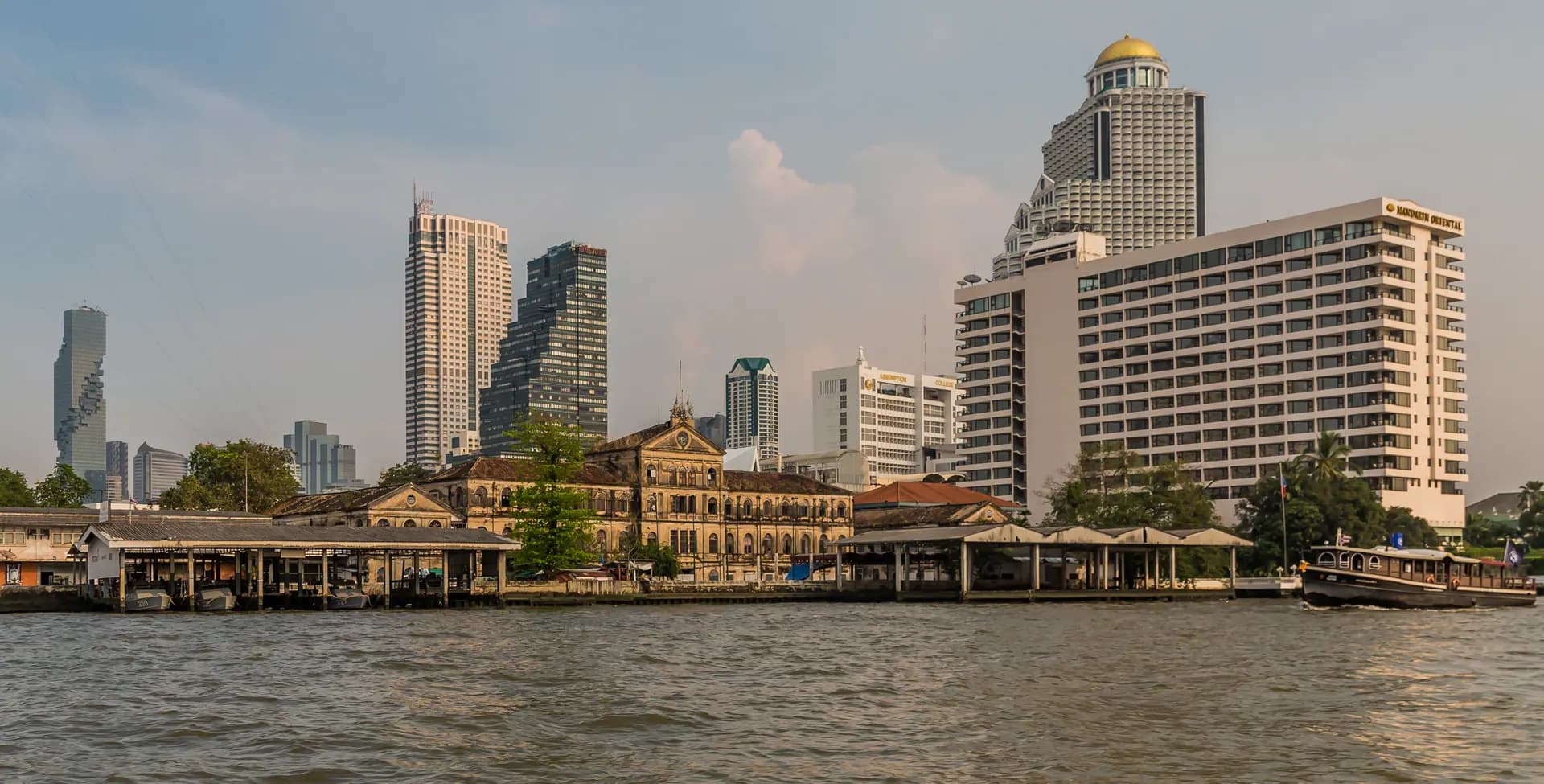
Bang Rak’s history is written along one road. This guide lists the district’s heritage stops in the order Charoen Krung’s numbered side streets give them, using the addresses published by the Bang Rak District Office and other official sources. It is a corridor, not a loop, and it gives no walking times or distances because none is published.
How the order is set
Charoen Krung’s side streets (sois) are numbered in sequence along the road, so a soi number is also the order in which you meet it. Every stop below has an official address on, or off, a numbered soi, and the order follows those numbers. That is all the ordering claims: it does not say how far apart two stops are, and it does not draw the road. Walk it from either end.
- Near Soi Charoen Krung 32Grand Postal BuildingThe central post office, also the home of TCDC.
- Soi Charoen Krung 34Wat Muang Khae30 Soi Charoen Krung 34.
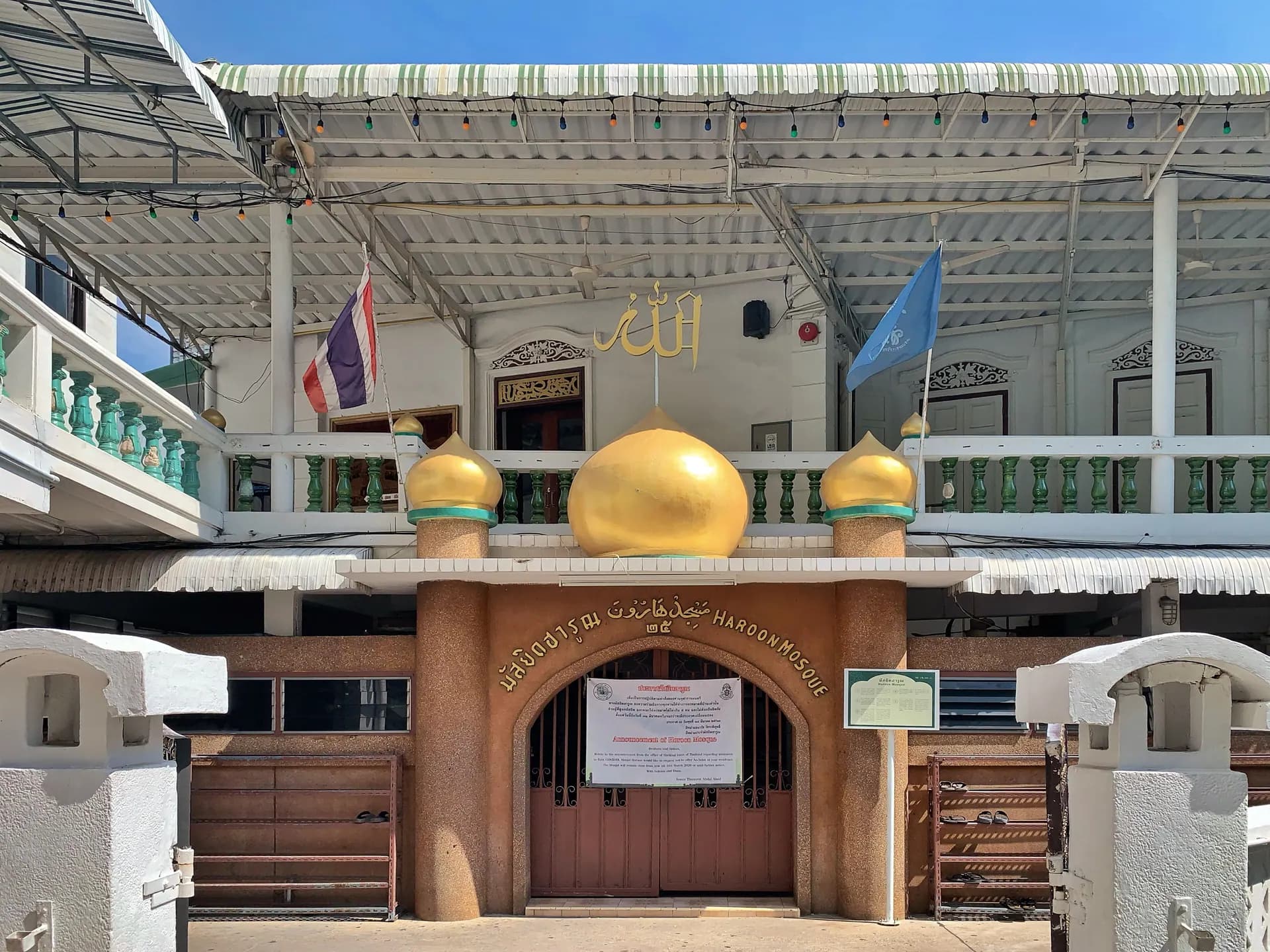
- Soi Charoen Krung 34Haroon Mosque25 Soi Charoen Krung 34.
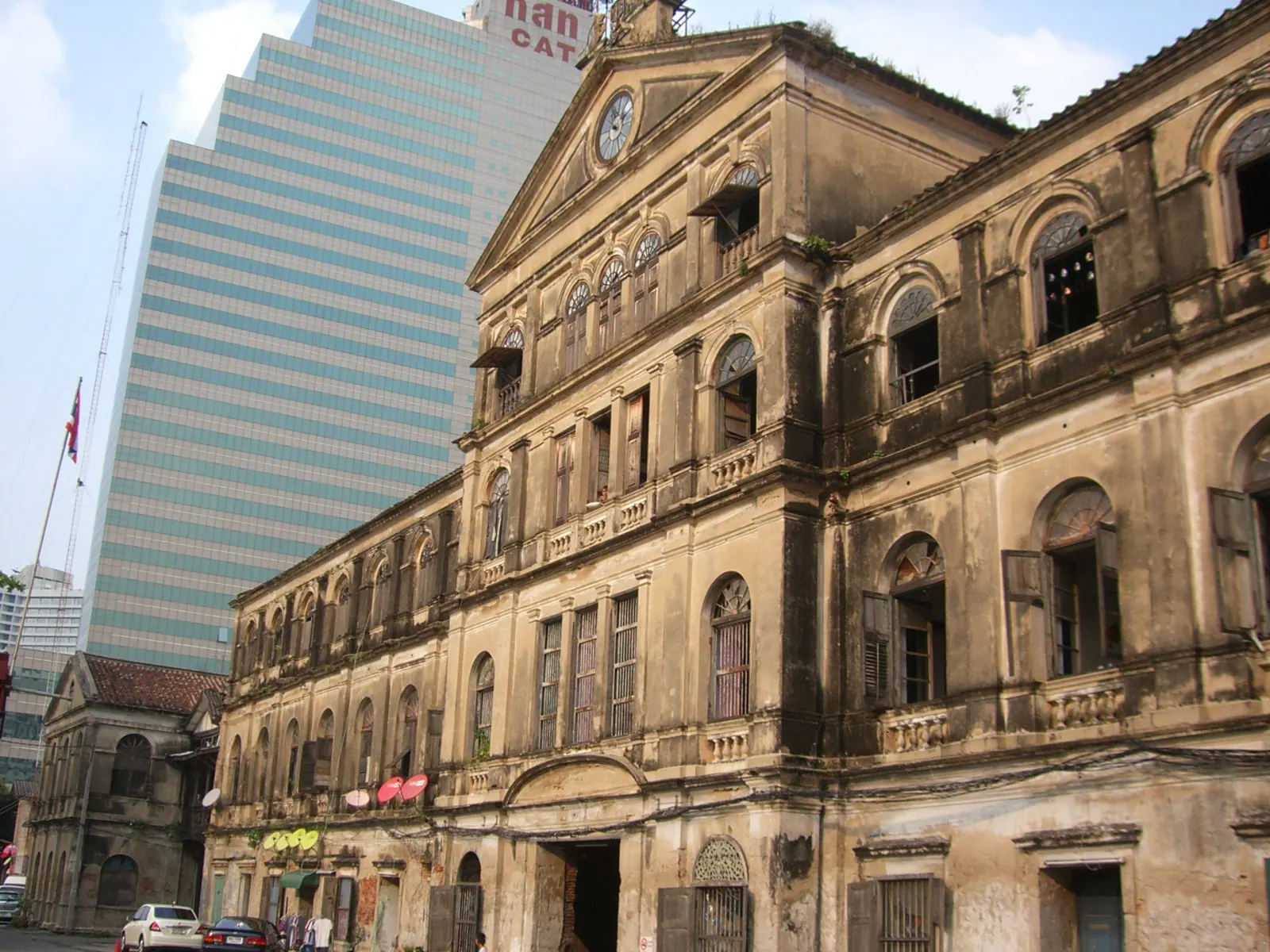
- Soi Charoen Krung 36Old Customs HouseBeside the river; registered with the Fine Arts Department.
- Charoen Krung 39, as listedChit Siam Ma ShrineListed by the district office.
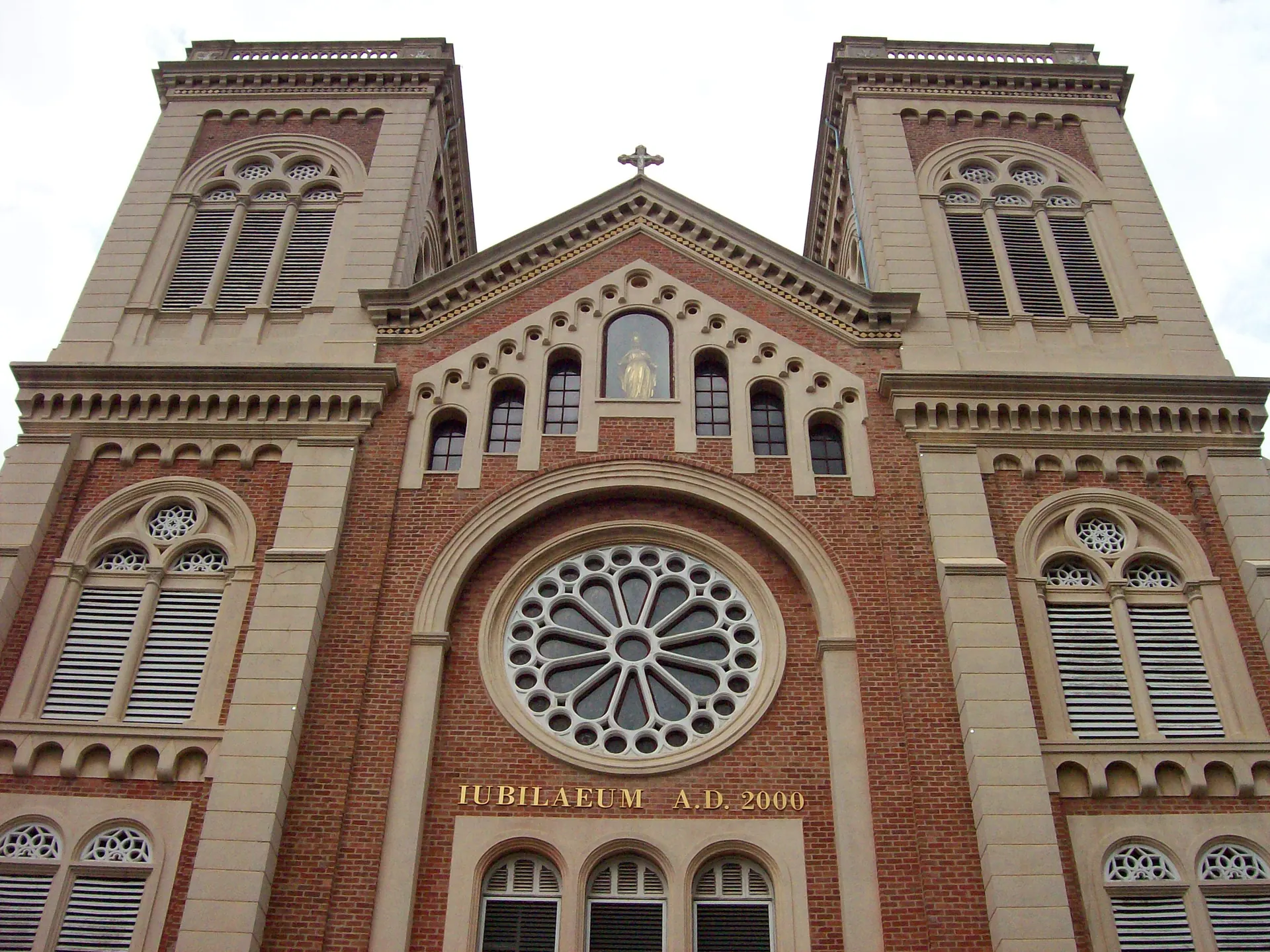
- Soi Oriental, Charoen Krung 40Assumption Cathedral23 Soi Oriental.
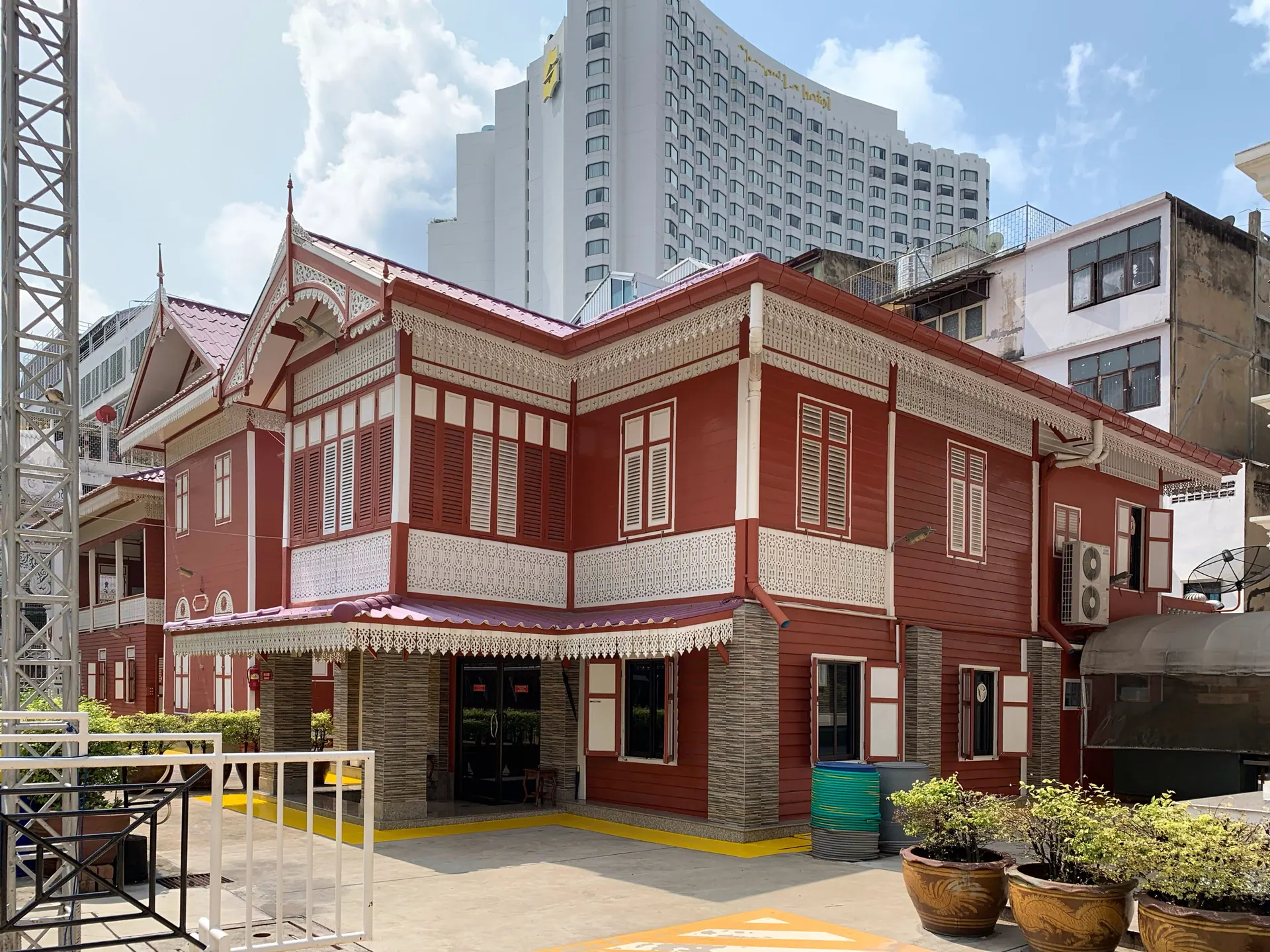
- Soi Charoen Krung 42/1Wat Suan Phlu58 Soi Charoen Krung 42/1.
- Charoen Krung 44, as listedChiao Eng Niao ShrineListed by the district office.
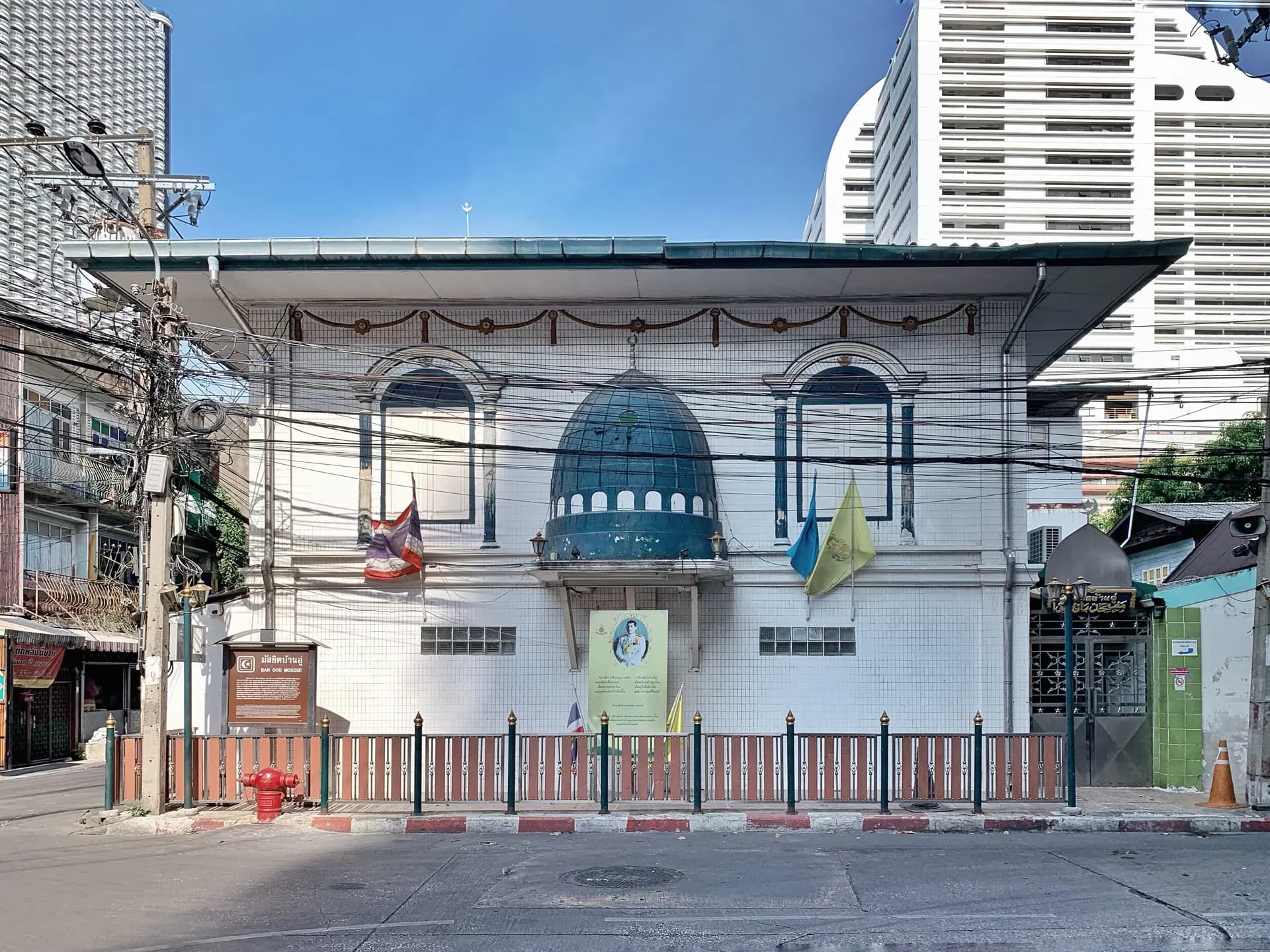
- Soi Ban U, Charoen Krung 46Ban U Mosque1 Soi Ban U.
Order is set by the soi numbers in the official addresses (Bang Rak District Office, the city’s VisitBangkok route and the Sirindhorn Anthropology Centre database). The two shrines are listed by the district office by soi only. This is not a map: it shows no distances or times, and the transliterations are ours.
What each stop is
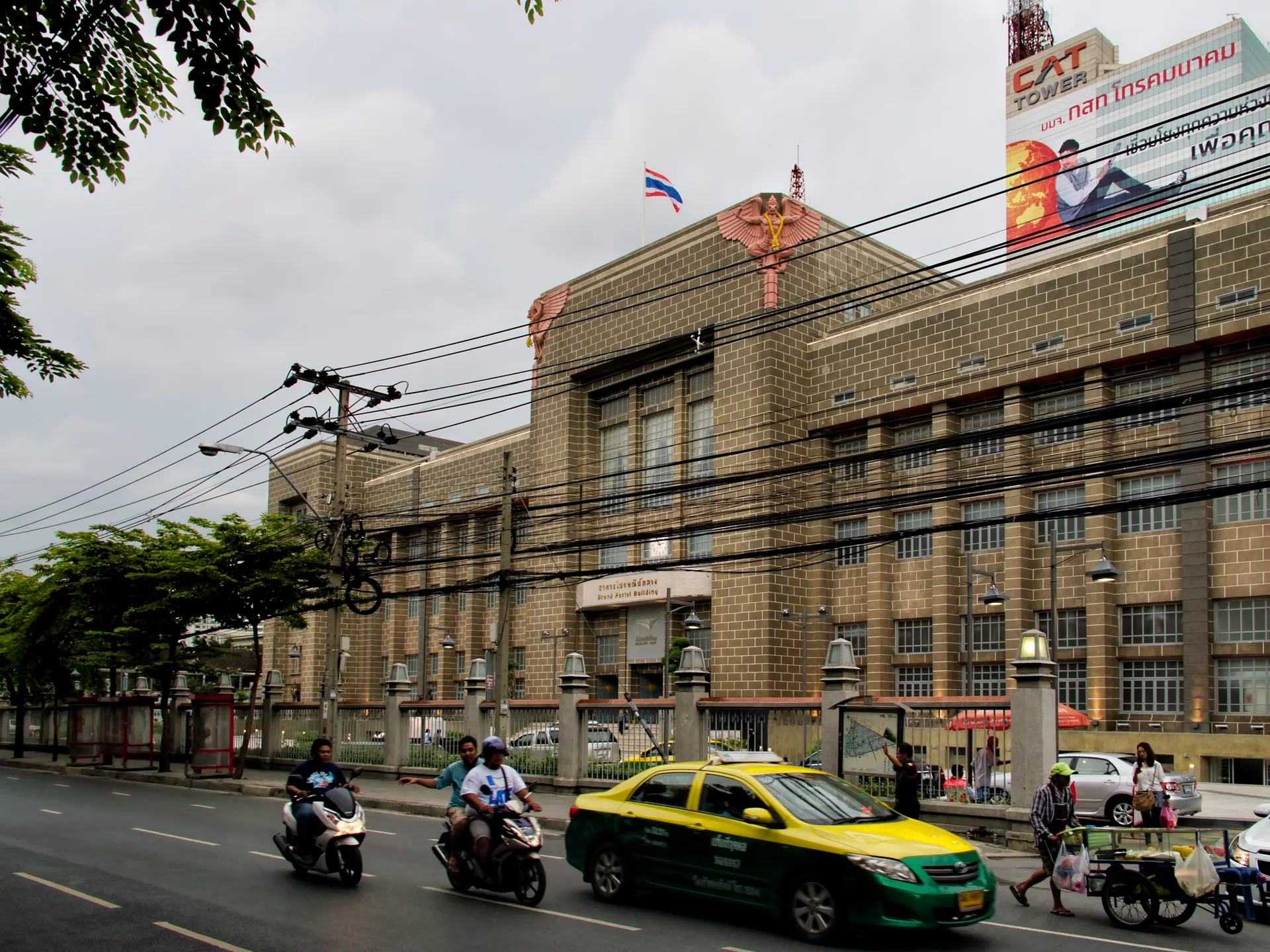
- 1 · Grand Postal Building (near Soi 32)
- The central post office on Charoen Krung Road, which the city’s tourism division describes as Neoclassical and completed in 1943, and which still works as a post office. The Tourism Authority of Thailand records that the Thailand Creative & Design Centre moved its headquarters here. It is the natural start of the corridor rather than a sight to queue for.
- 2–3 · Wat Muang Khae and Haroon Mosque (Soi 34)
- Two neighbours on Soi 34. For the mosque the district office gives a history: it was founded by Tok Haroon Bafadan, an Indonesian-born Muslim settler, as a single-storey teak house on stilts around 1828, early in the reign of Rama III; later rebuilt in brick and mortar, reusing timber for the floor and the round columns. When mosques had to register under the Islamic Mosques Act in 1947 it was registered as Muang Khae Mosque, and it was later renamed Haroon in his honour. The office gives no history for Wat Muang Khae, and we add none.
- 4 · Old Customs House (Soi 36)
- A riverside building listed in the Sirindhorn Anthropology Centre’s database under the name Sunlakasathan, also called Rong Phasi Roi Chak Sam. It is registered with the Fine Arts Department and maintained by the Treasury Department, and the database says its exterior can be visited daily without charge. It was built in 1886–1888 to a Neo-Palladian design by Joachim Grassi. It is now being redeveloped as a hotel — the operator says it is taking reservations for an opening on 20 December 2026 — so access may change; check before you go.
- 5 and 8 · Two shrines (Charoen Krung 39 and 44)
- The district office lists four Chinese shrines in Bang Rak; two stand on this corridor, Chit Siam Ma Shrine (Charoen Krung 39) and Chiao Eng Niao Shrine (Charoen Krung 44). It gives no history for either, and we add none. Treat them as working shrines.
- 6 · Assumption Cathedral (Soi Oriental, Charoen Krung 40)
- The district office dates the first church on the site to about 1809 and the present building to 1909, designed and supervised by a French architect in an Italian Renaissance style, with marble and stained glass from France and Italy. It is an active parish that publishes, and changes, its own service times.
- 7 · Wat Suan Phlu (Soi 42/1)
- The district office says the temple was first called Wat Khlong Lom because a canal ringed it, and that Suan Phlu means betel plantation, after the betel Chinese settlers grew around it. Its monks’ quarters are known for carved woodwork; behind the temple’s pavilion a Thai-style pavilion stands in a pond as a Guan Yin shrine, and a separate hall holds a reclining Buddha. It is a working temple.
- 9 · Ban U Mosque (Soi Ban U, Charoen Krung 46)
- Listed by the district office at 1 Soi Ban U, without history; a working mosque.
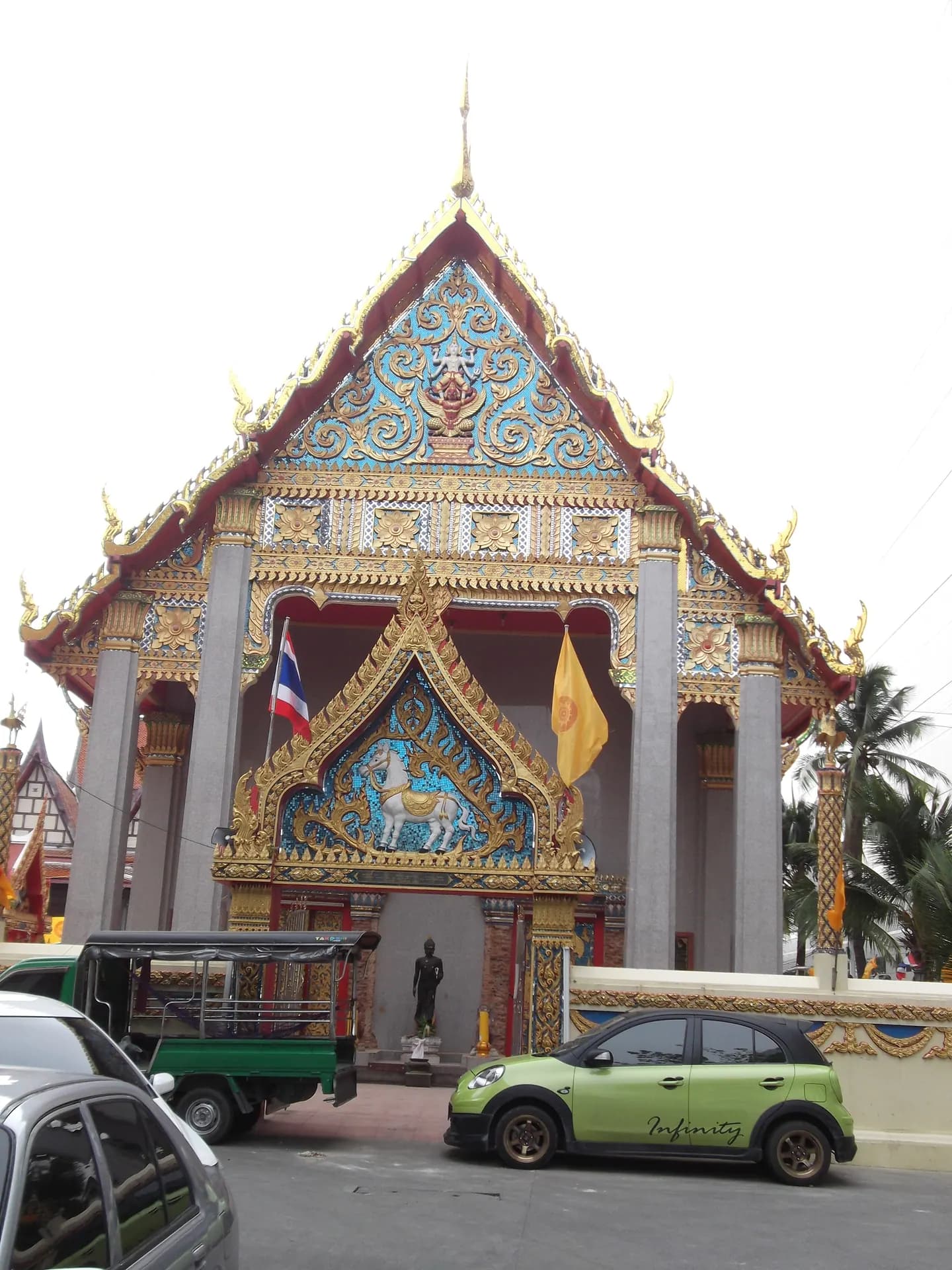
Three more places the district office lists are off the corridor: Sri Maha Mariamman Temple at 2 Silom Road, Wat Maha Pruettharam on Maha Phruettharam Road, and Wat Hua Lamphong at 728 Rama IV Road.
Before you go
A note on dates
Founding years for several buildings here are given differently by different published sources. Each date above is the one the named official source gives; where an official source gives none, this guide states none. If you see confident years attached to these places elsewhere, treat them as claims rather than facts unless they carry a source.
A note on the hotel: Bangkok Gem Hotel’s address is on Soi Charoen Krung 42/1 — the same soi as Wat Suan Phlu (stop 7). This guide gives no walking time or distance between them.
Sources and fact review
Every claim below is traceable to a named source. Items marked volatile — opening hours, fares, routes and exhibition schedules — change without notice and are rechecked before publication rather than presented as permanent.
The district office lists places of worship and schools with addresses: Wat Muang Khae, 30 Soi Charoen Krung 34; Haroon Mosque, 25 Soi Charoen Krung 34; Assumption Cathedral, 23 Soi Oriental, Charoen Krung 40; Wat Suan Phlu, 58 Soi Charoen Krung 42/1; Ban U Mosque, 1 Soi Ban U, Charoen Krung 46; four Chinese shrines including Chit Siam Ma (Charoen Krung 39) and Chiao Eng Niao (Charoen Krung 44); Wat Hua Lamphong, 728 Rama IV Road; Wat Maha Pruettharam on Maha Phruettharam Road.
Haroon Mosque history: founded by Tok Haroon Bafadan, an Indonesian-born Muslim settler, as a single-storey teak house on stilts around 1828 (early in the reign of Rama III); later rebuilt in brick and mortar, reusing timber for the floor and the round columns; registered in 1947 under the Islamic Mosques Act as Muang Khae Mosque and later renamed Haroon in his honour.
Assumption Cathedral: first church built about 1809, completed in 1822 and made a cathedral the next year; the present building dates from 1909, designed and supervised by a French architect, in an Italian Renaissance style, with marble and stained glass from France and Italy, 32 metres from ground to tower top.
Wat Suan Phlu: at 58 Soi Charoen Krung 42/1 (described as the soi of the Shangri-La hotel); formerly called Wat Khlong Lom because a canal ringed it; the name Suan Phlu comes from betel plantations grown by Chinese settlers; its monks’ quarters are known for carved woodwork; it has a Guan Yin shrine in a pond pavilion and a hall with a reclining Buddha.
The city’s designated Charoen Krung – Talad Noi route lists six stops in order (River City Bangkok, Rong Kueak Shrine, Talat Noi Market, street art on Charoenkrung Road, TCDC, Grand Postal Office) and places a street-art stop at Charoenkrung Soi 32 “near Central Post Office”. It describes the Grand Postal Office as Neoclassical and completed in 1943, and still working as a post office. It gives no distance for the route.
The Old Customs House (Sunlakasathan, also called Rong Phasi Roi Chak Sam) stands in Soi Charoen Krung 36 beside the Chao Phraya, Bang Rak; it is registered with the Fine Arts Department and maintained by the Treasury Department; its exterior can be visited daily without charge.
The Old Customs House is being redeveloped as The Langham, Custom House, Bangkok; the group says it is taking reservations for an opening slated for 20 December 2026.
The cathedral is an active parish that publishes, and changes, its own service times on its website.
The Thailand Creative & Design Centre relocated its headquarters to the Grand Postal Building on Charoen Krung Road; Charoen Krung’s side streets are numbered (Soi 24, 28, 30 and 36 are named).
The operator’s schedule lists Oriental Pier (N 1) as closed for renovation.