
Creative District
The Charoen Krung Creative District
Charoen Krung is a road of more than 150 years; its “creative district” label is far newer, and institutions built it. A guide to what the label covers, what anchors it, and how to visit well.
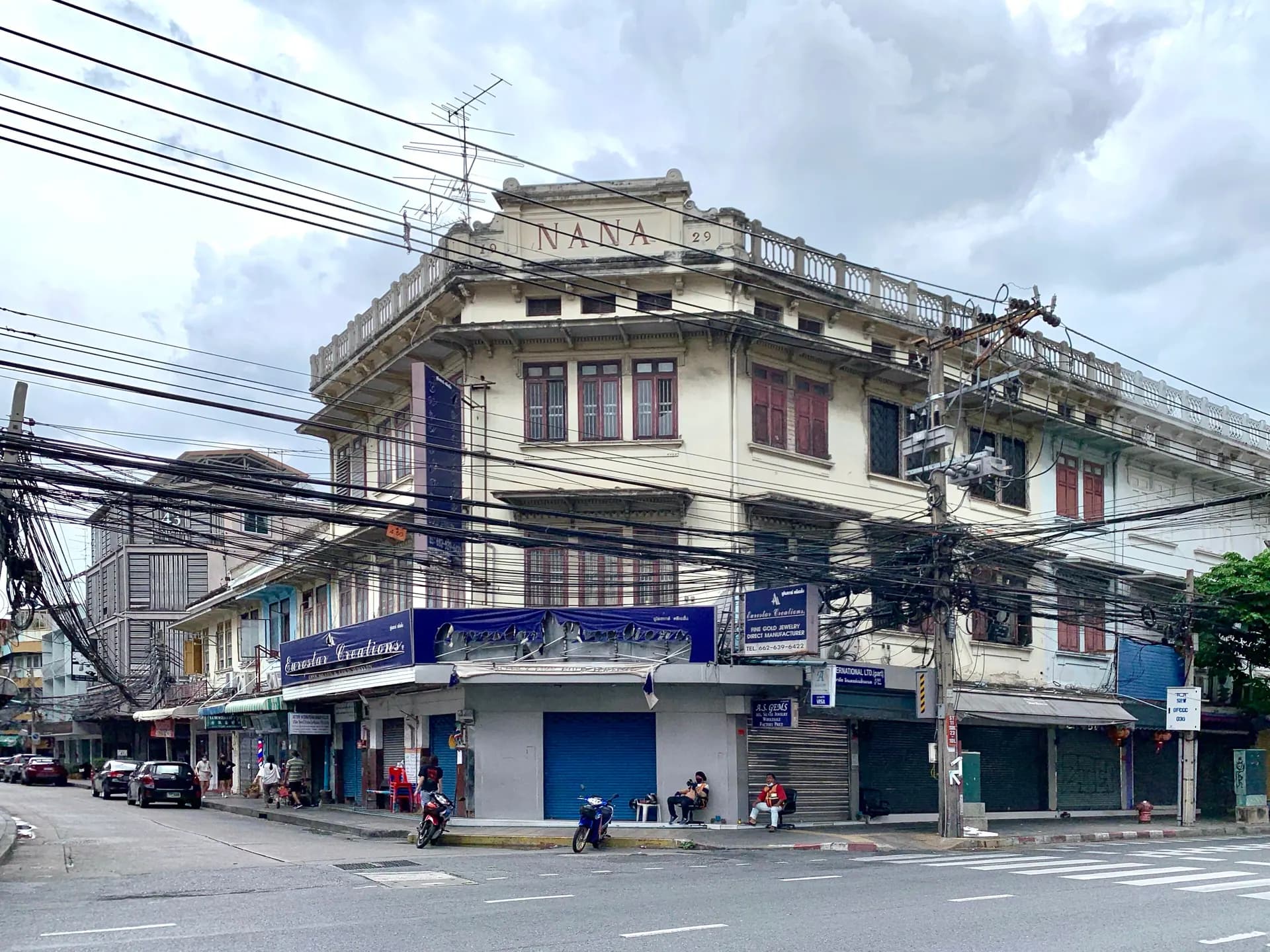
The Charoen Krung Creative District is not a place with edges. It is a name for one stretch of a very long road — the part around the Grand Postal Building and the Talat Noi community beside it — where design institutions, galleries, old shophouses and working workshops ended up next to each other. The road itself begins in the old royal city of Rattanakosin, runs down through Chinatown, crosses Bang Rak and continues south to Bang Kho Laem. Most of it is not the creative district at all, and knowing which stretch is saves an afternoon.
The road came first, by about 150 years
The Tourism Authority of Thailand describes Charoen Krung as a 150-year-old road, and that age is the thing worth holding on to. The design institutions arrived within living memory. The street they arrived on is older than almost everything else in the neighbourhood, and it was laid at a time when Bangkok still moved mainly on water.
A note on a claim you will meet everywhere. Charoen Krung is very often called “Bangkok’s first paved road”. We do not use that wording. We could not confirm it against any official or primary source we were able to read, and the sources that do repeat it are travel guides citing one another. The point survives without the superlative: this is an old and consequential street, and you do not need a record to make it interesting.
What the tourism authority does record is what the road became — an old riverside quarter known for its Chinese and Muslim street food and its hotels, gradually reworked into galleries, workshops and small independent businesses. That layering is the reason the street still feels unlike the rest of central Bangkok.
A label with an author, not a boundary
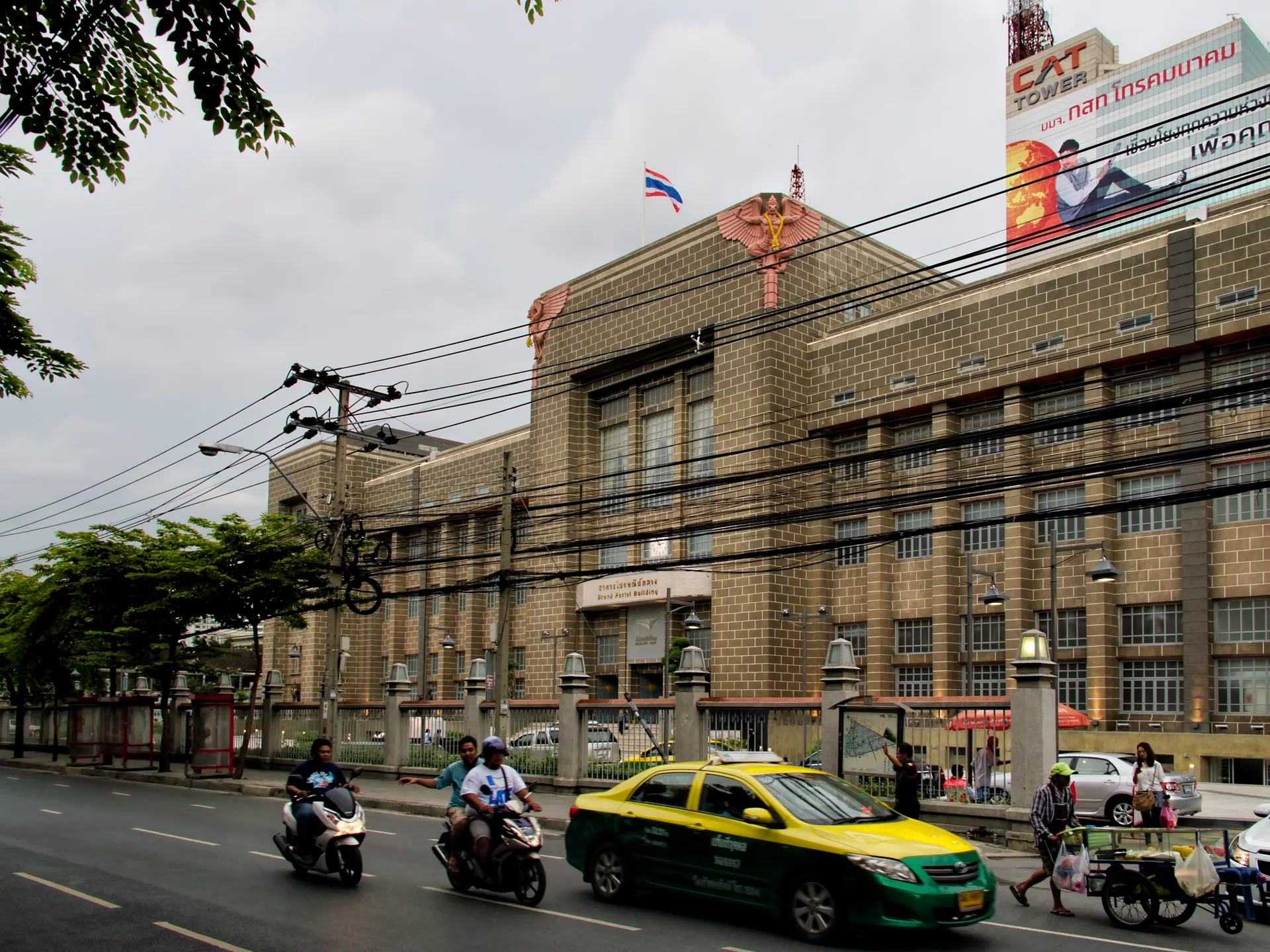
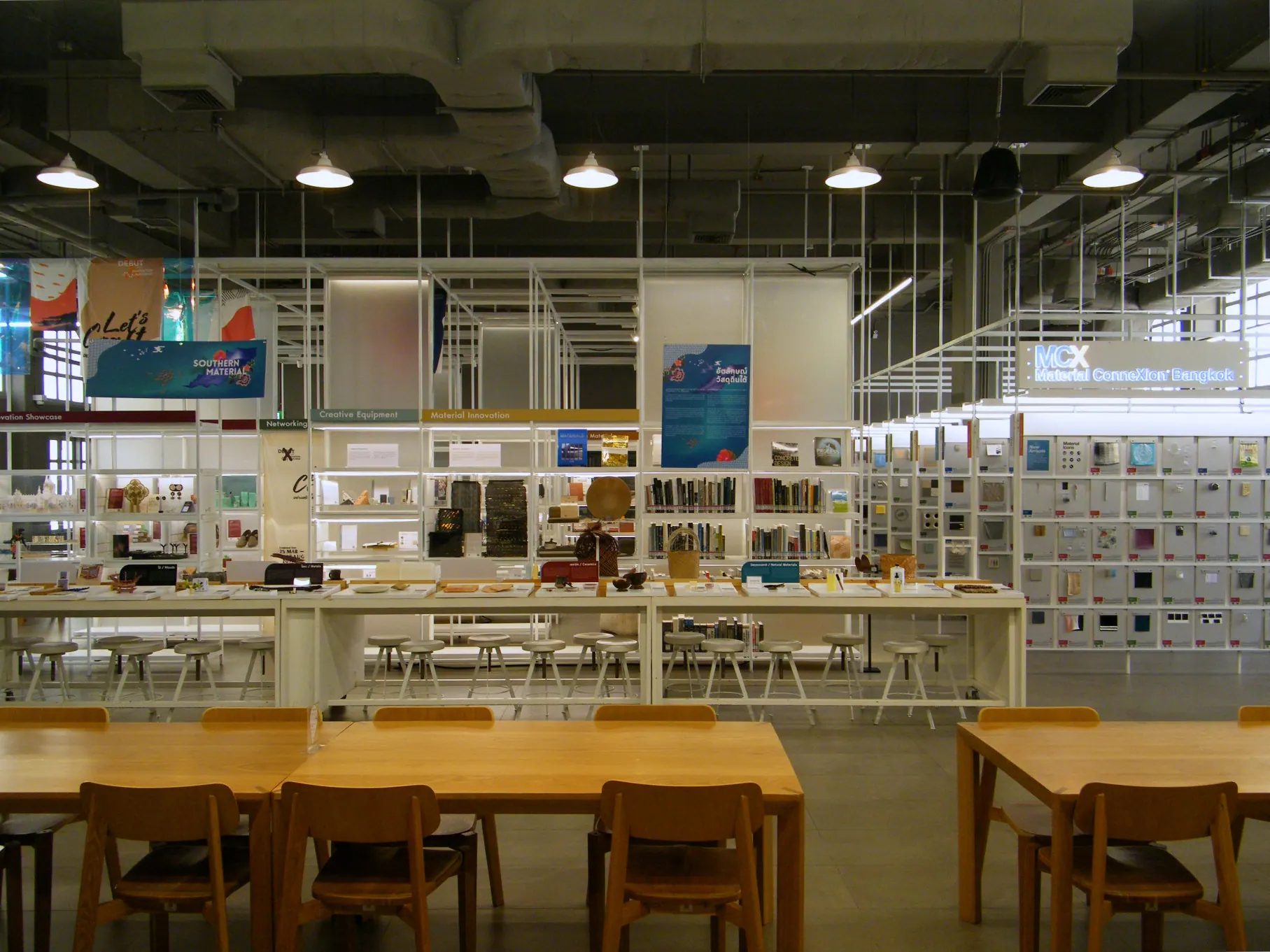
The label is recent and it is institutional. The Tourism Authority of Thailand traces it to the moment the Thailand Creative & Design Centre relocated its headquarters to the Grand Postal Building on Charoen Krung Road, bringing a large arts and design library, an exhibition zone and co-working space onto the street. We give no year for that move: published sources disagree, and the article does not need a date to make its point.
It is also looked after. Bangkok Design Week’s 2026 site gives the Creative Economy Agency, a public organisation, as its contact at the Grand Postal Building, 1160 Charoen Krung Road. It names the area “Charoenkrung–Talad Noi” and describes a signage-and-wayfinding project for the Charoenkrung–Talad Noi area and, separately, a street-safety project called Curbscape — work that treats the area as a district to be managed.
A peer-reviewed study of the district, published in Annals of Tourism Research in 2023, reaches a similar view from the outside: tourism was used as a top-down initiative to popularise the district, and walking tours are what stitch its separate sites into a single story of a multicultural, creative Charoenkrung. In practice that means the district behaves more like a route than an area — which is why looking for its edges is the wrong way to find it.
What the label covers on the ground
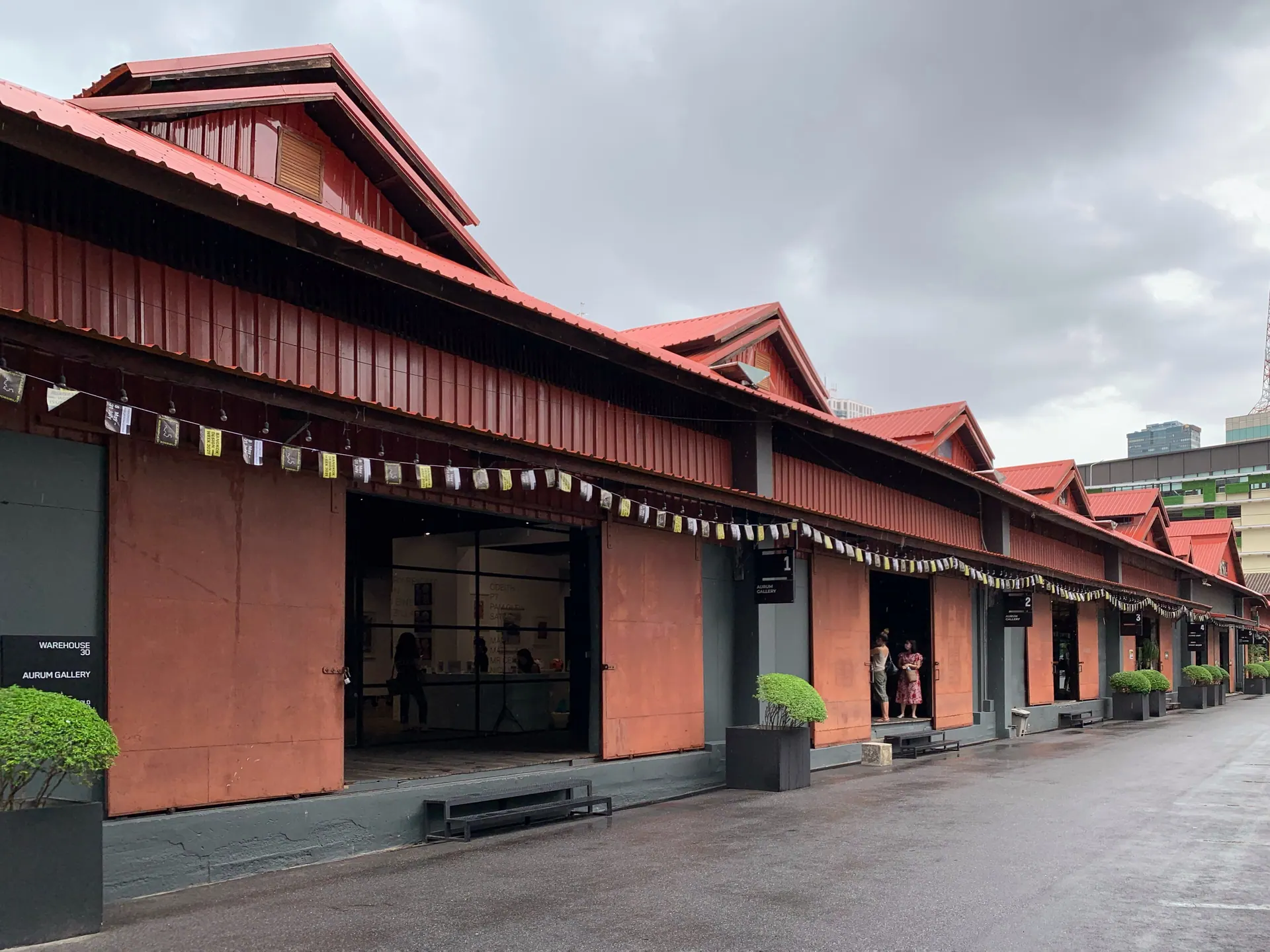
What followed the design centre is concentrated rather than scattered. The tourism authority places a cluster of art spaces and galleries within about a kilometre of it — among them Serindia Gallery in Soi Charoen Krung 36, in a post-colonial house; Warehouse 30 in Soi 30, seven linked warehouses given over to co-working space, shops, cafés and a screening room; Most Gallery in Soi 28, open by appointment; Speedy Grandma; and the Soy Sauce Factory in Soi 24, old shophouses now holding a restaurant below and an exhibition space above.
Two official sources describe the same scale independently. The tourism authority says “about a kilometre” around the design centre; Bangkok Design Week 2026 published a half-day walking route of about 1.2 km from the Grand Postal Building and TCDC to venues in Talat Noi. The walkable core is small, which is the useful thing to know.
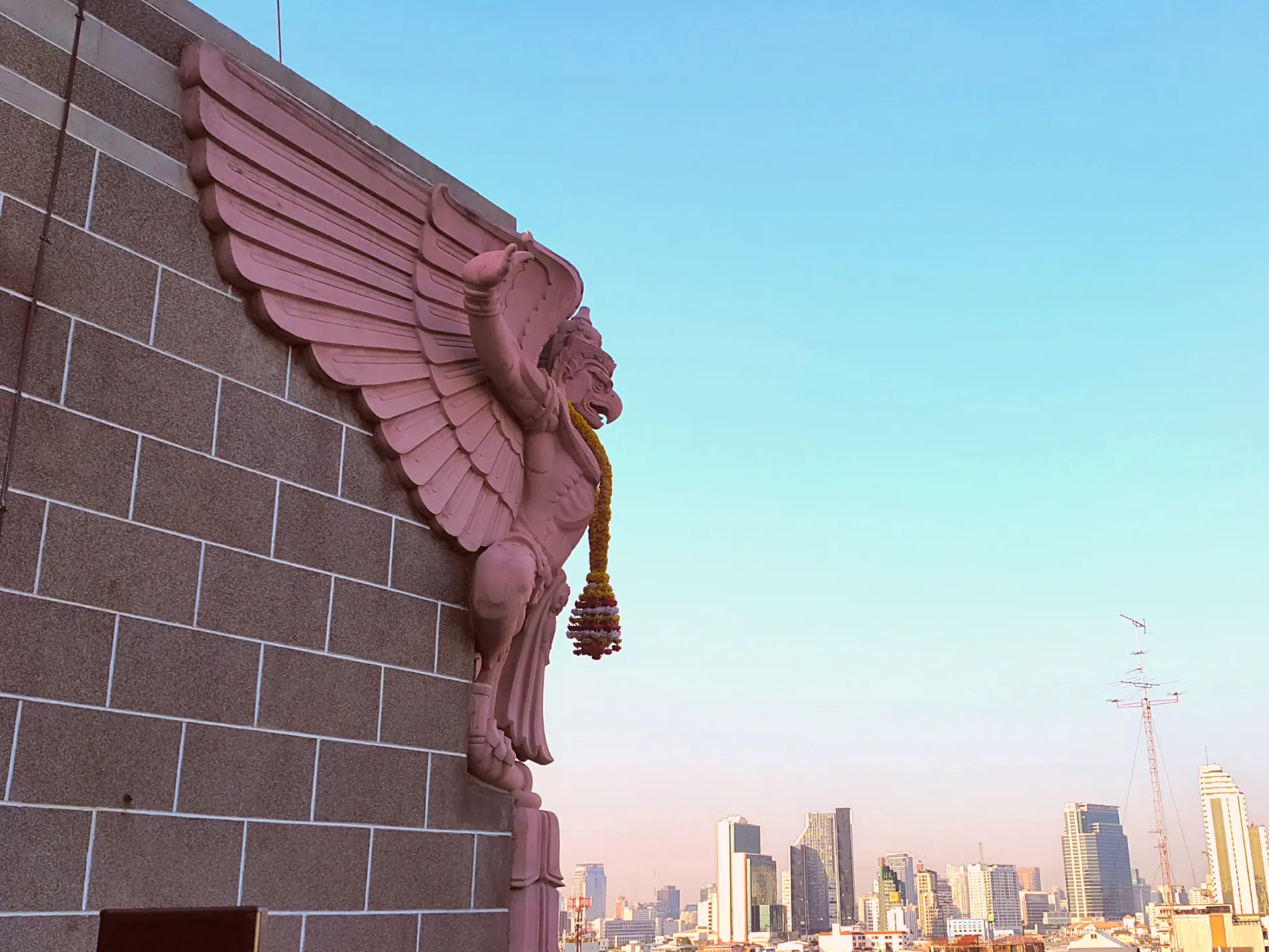
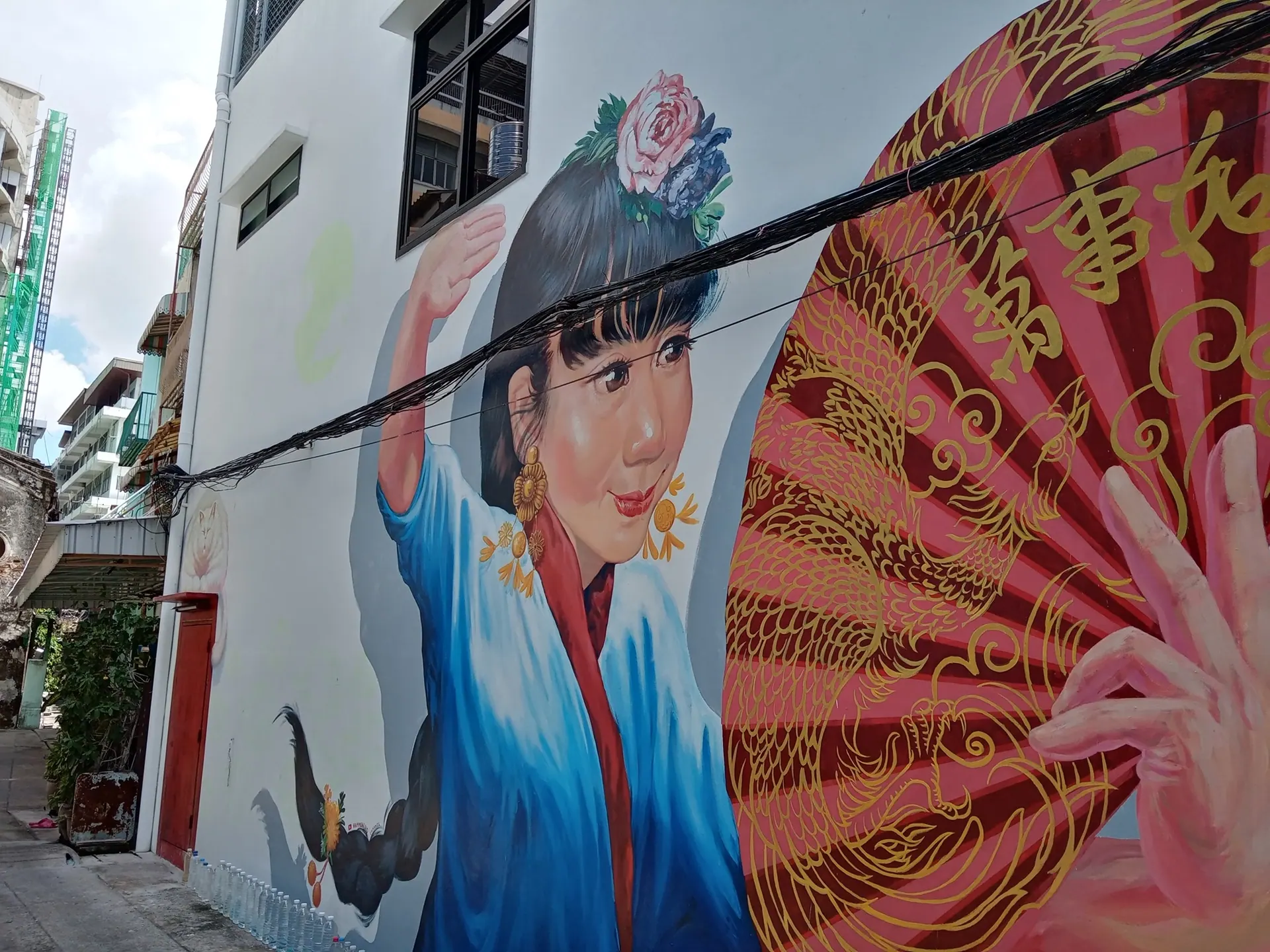
What that means on the ground is less tidy than a brochure suggests, and better. There is no arts complex to walk around. There are galleries in converted shophouses, a design centre inside a post office, murals left over from a 2016 street-art festival, printers and metalworkers who have been there far longer than any of it, and cafés that arrived because of the rest. The interest is in the adjacency, not in any single venue.
- The road's direction
- Charoen Krung runs roughly parallel to the Chao Phraya, north to south. The river is always on the same side, which makes it hard to get badly lost once you have your bearings.
- The numbered sois
- Side streets are numbered Charoen Krung 1, 2, 3 and upward as you move south. They are the usual way to describe where something is, and most addresses here are given as a soi number.
- The Grand Postal Building
- The monumental General Post Office on Charoen Krung Road, which now houses the Thailand Creative & Design Center alongside a working post office. It is the district's usual landmark and orientation point.
- The river end
- Sois running west off Charoen Krung lead down to the water, to piers, hotels and the older trading lanes. Sois running east climb toward Silom and the modern city.
- Rail access
- BTS Saphan Taksin on the Silom Line is the usual rail approach to the southern end of the district.
How to visit it well
The common mistake is to treat the district as a checklist and try to cover the whole road. The better approach is to pick one section and let it take an afternoon.
- Use the anchor. The Grand Postal Building and TCDC are the point both the tourism authority and the festival measure from, so starting there gives the walk a centre rather than a guess.
- Walk the sois, not only the main road. Charoen Krung itself is a traffic artery; almost everything interesting is a short way down a numbered side street — the galleries the tourism authority names sit between about Soi 24 and Soi 36.
- Go into one institution properly rather than three briefly. The design centre in particular is a place to sit down in, not to photograph and leave.
- Look up at the buildings. The mix of shophouse, colonial-era commercial and mid-century government architecture is the clearest record of what the street was for at different times.
- Leave the evening on the river. The district’s western edge is the water, and the simplest way to end is to walk down a soi to a pier.
The district is not only creative
It is worth resisting the label a little. The same stretch of Charoen Krung holds the principal Catholic church of Thailand, one of Bangkok’s oldest mosque communities, Chinese and Indian commercial streets, and the edge of the city’s gemstone trade. The design institutions are the newest layer on a street that has been a meeting point for foreign trade since it was built — and that layering is why the district rewards a second visit more than most Bangkok neighbourhoods do.
Sources and fact review
Every claim below is traceable to a named source. Items marked volatile — opening hours, fares, routes and exhibition schedules — change without notice and are rechecked before publication rather than presented as permanent.
Charoen Krung is a 150-year-old road; the Thailand Creative & Design Centre relocated its headquarters to the Grand Postal Building on Charoen Krung Road; art spaces and galleries lie within about one kilometre of it, including Serindia Gallery (Soi Charoen Krung 36), Warehouse 30 (Soi 30), Most Gallery (Soi 28), Speedy Grandma and the Soy Sauce Factory (Soi 24) — which also shows that the road’s side streets are numbered.
The 2026 site gives the Creative Economy Agency (Public Organization) as contact at The Grand Postal Building, 1160 Charoen Krung Rd., Bang Rak, Bangkok 10500; describes a Charoenkrung Signage & Wayfinding project for the Charoenkrung–Talad Noi area, by the Creative Economy Agency and SATARANA, and a separate “Curbscape” pedestrian-safety project; and lists programmes dated from 29 January to 5 February 2026.
Bangkok Design Week 2026 published a “Charoenkrung – Talat Noi” half-day walking route of about 1.2 km, starting at the Grand Postal Building on Charoenkrung Road and TCDC Bangkok and reaching venues in Talat Noi (it names The Corner House Bangkok (Talat Noi)).
Peer-reviewed study “Linear tourism, multiculturalism, creative district: The case of Charoenkrung creative district in Thailand”: in the Charoenkrung Creative District tourism has been deployed as a top-down initiative to popularise the district, and walking tours are used to weave disparate sites into a single narrative of a multicultural district with creative potential.