

River & Transport
The Chao Phraya Boat Guide
The Chao Phraya is a working transport corridor, not a sightseeing cruise. Understanding how the system is organised is more useful than memorising a schedule that will be out of date.
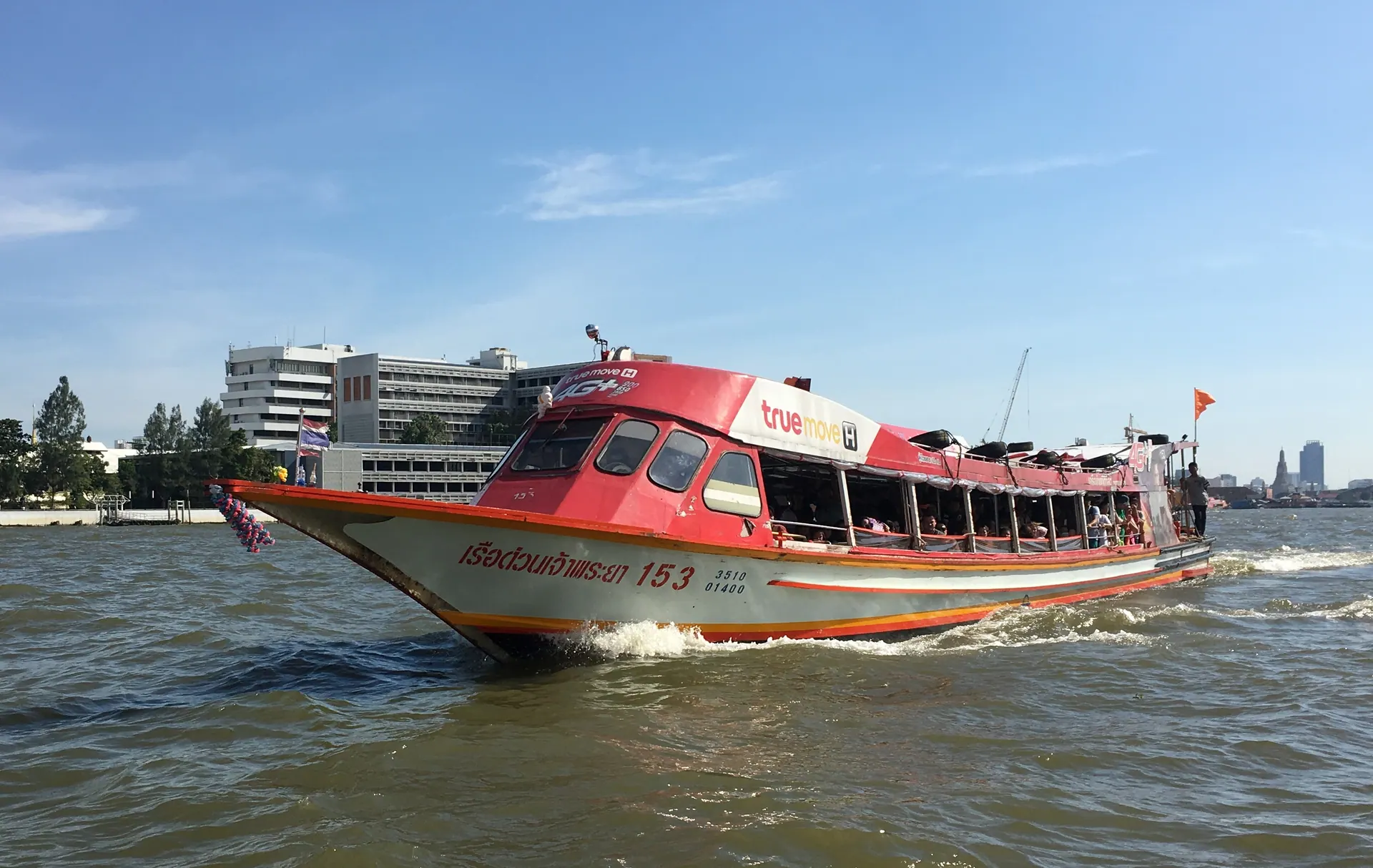
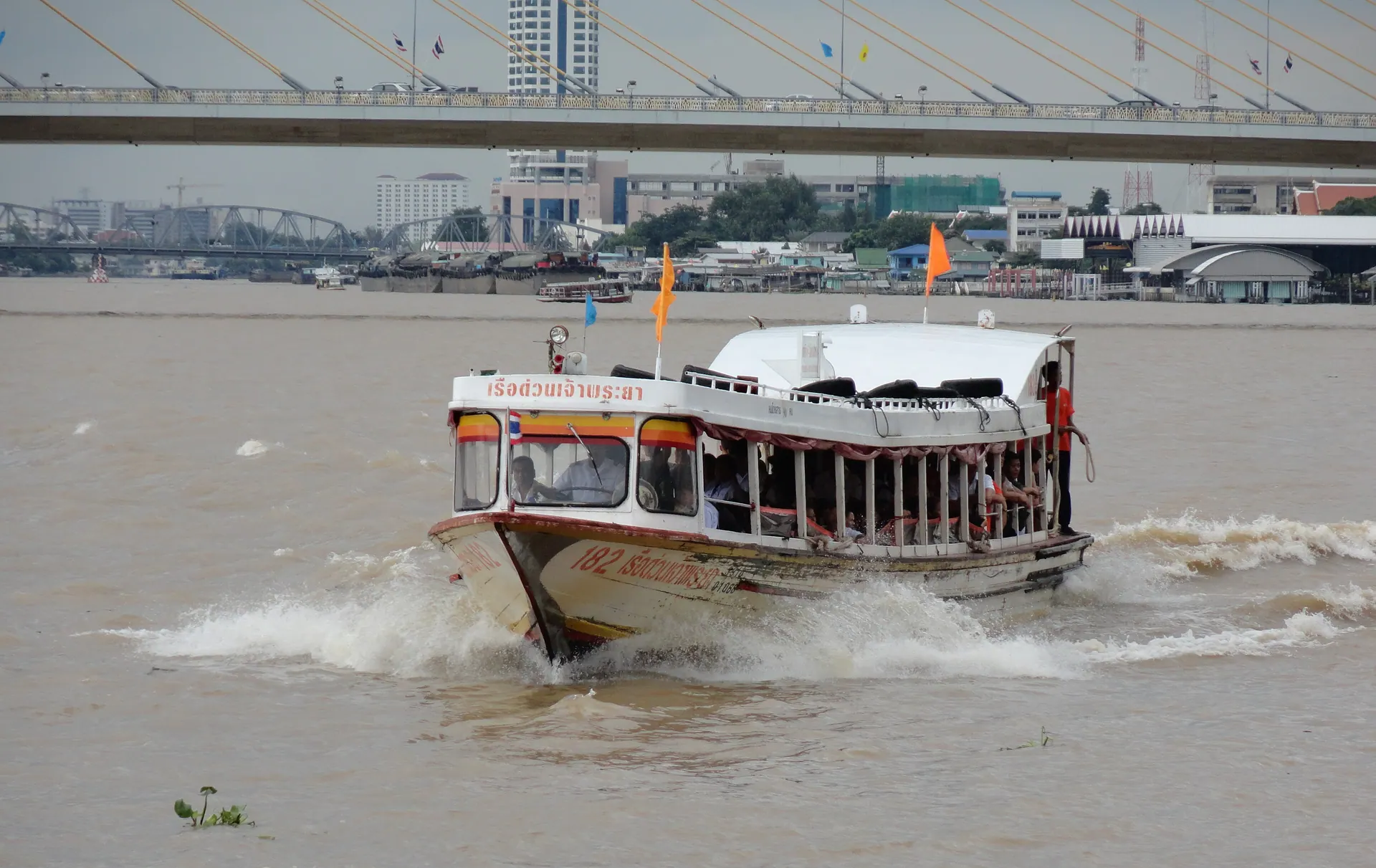
The Chao Phraya carries scheduled passenger boats that Bangkok residents use to get to work, and they are usually the fastest way to move between the riverside districts. The single most useful thing to understand is that there is more than one kind of boat on the water, they are run by different operators, and they do not all stop at the same piers.
The services are not one service
Broadly there are two categories a visitor will meet. The commuter services are run by the Chao Phraya Express Boat operator, which distinguishes its routes by coloured flags — different flags stop at different piers, and some skip most of them. Separately, a tourist boat operates its own route with its own ticketing and its own stopping pattern, aimed at visitors moving between the main riverside sights.
They are not interchangeable and they are not priced the same. Getting on the wrong one is the most common river mistake, and it usually means watching your pier go past.
- Flags mean routes
- On the commuter services the flag colour is the route. A boat with a different flag may not stop where you are going, even though it is on the same river in the same direction.
- Piers are numbered
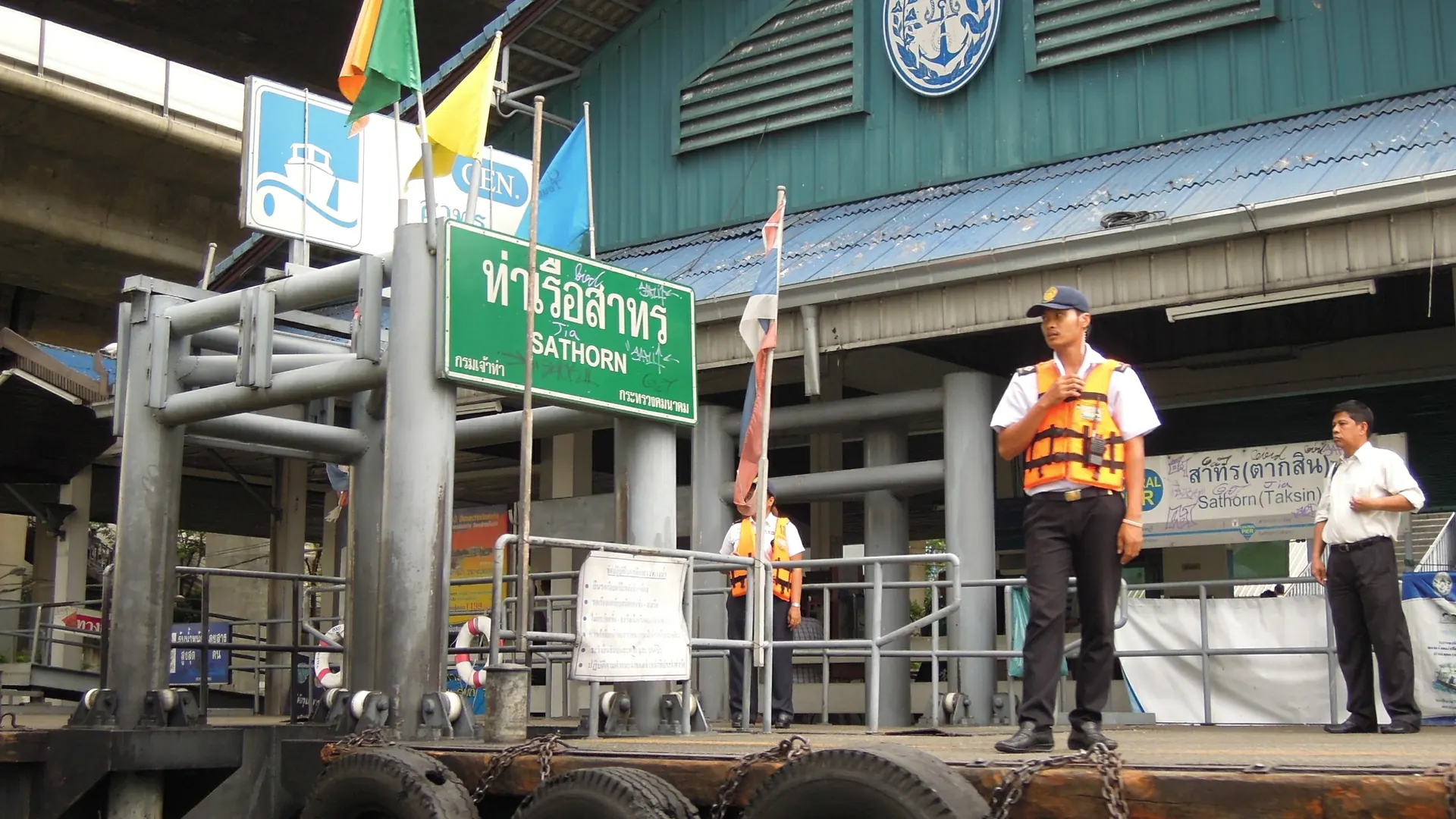
- Piers carry numbers as well as names, and the numbers run in order along the river. Knowing your pier number makes it far easier to work out how far along you are.
- The tourist boat is separate
- Different operator, different ticket, different stops. Convenient for the main sights, less useful as transport.
- Direction matters more than distance
- Upriver and downriver boats leave from the same pier. Confirm the direction before boarding, not after.
- Crossings are not the same thing
- Short cross-river ferries connect the two banks directly. They are not the long-distance services and do not follow their routes.
From Bang Rak specifically
Bang Rak’s advantage is that the river and the rail network meet at its southern end: the BTS Silom Line serves Saphan Taksin station at the river end of the district, which puts a major pier and a rail station within a short walk of each other. That interchange is the reason so many itineraries from this part of the city start on the water.
Practically, that means you can reach the historic quarter upriver without crossing the city by road, and you can come back the same way in the evening. For most visitors staying in this district, that single connection does more work than any other piece of Bangkok’s transport network.
Why this guide has no timetable
Because we would not be able to keep it correct. Fares, first and last departures, stopping patterns and pier closures are set by the operators and change without notice, and a printed schedule that is six months stale is worse than none — it looks authoritative and it will strand you. The operators publish current information; check it on the day you travel.
Sources and fact review
Every claim below is traceable to a named source. Items marked volatile — opening hours, fares, routes and exhibition schedules — change without notice and are rechecked before publication rather than presented as permanent.
Scheduled passenger boat services operate on the Chao Phraya under flag-coded routes; routes, stopping patterns, operating hours and fares are set by the operator and change.
A separate tourist boat service operates on the Chao Phraya with its own route, ticketing and stopping pattern.
The BTS Silom Line serves Saphan Taksin station at the river end of Bang Rak.