
Heritage
The Trading Quarter: How Bang Rak Became a District of Arrivals
This is where nineteenth-century foreign trade physically landed. What remains is not a preserved quarter — it is a working street with an unusually well-documented past.
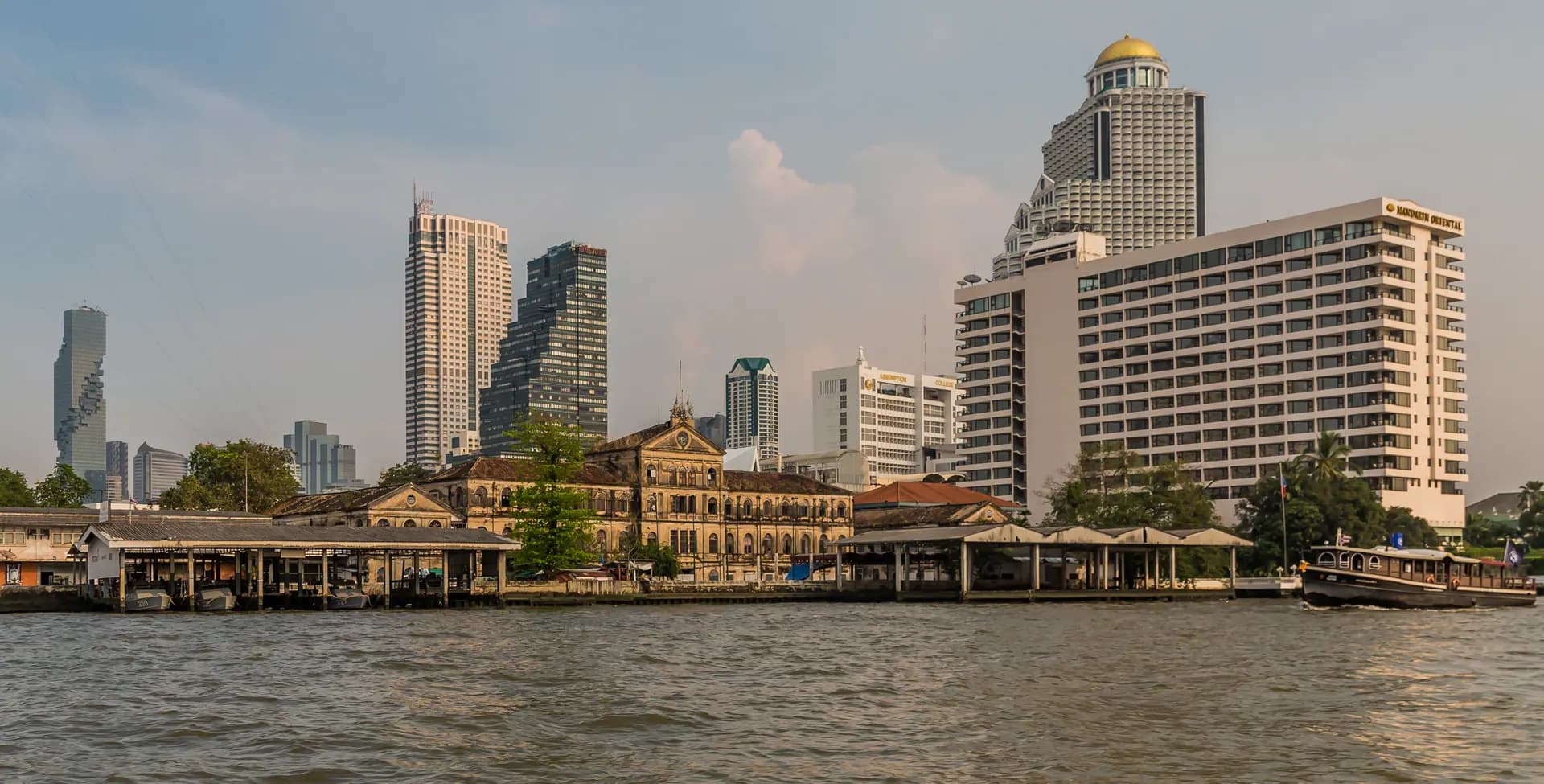
If you want to understand why Bang Rak contains a Catholic cathedral, a mosque, Chinese shophouses and the remains of European trading houses within a few hundred metres of one another, the answer is not tolerance and it is not coincidence. It is a port.
The logic of a port district
Nineteenth-century Bangkok traded through the river, and foreign trade concentrated where the deep water met the city. Consulates went where the ships were. Trading firms went where the consulates were. The communities who worked for both — Chinese, Indian, Muslim, Portuguese and a broader European mix — settled within walking distance of the wharves, because every part of the business happened on foot.
The result is a district assembled by commerce rather than by planning: a religious building for each community, warehouses behind the street, housing stacked above the shops. That pattern is still readable, and it is why a short walk here crosses more cultural boundaries than a long walk almost anywhere else in the city.
What actually survives
Bang Rak is not a preserved quarter and should not be described as one. It is a working district in which some nineteenth- and early twentieth-century fabric happens to have survived, usually because it stayed useful. Buildings here have been continuously occupied, subdivided, re-fronted and repaired. That is why the upper storeys are often far more legible than the ground floors.
- Religious
- Assumption Cathedral, a mosque, Chinese shrines and a Hindu temple — each the marker of a community that worked the port.
- Commercial
- Shophouses in long thin plots, trade below and living above. The most common surviving building type.
- Institutional
- The heavier stone-faced buildings: government, postal and banking functions that arrived with the road.
- Industrial
- Warehouses and godowns set back towards the river, several now converted to galleries and workspaces.
Assumption Cathedral, and how to treat it
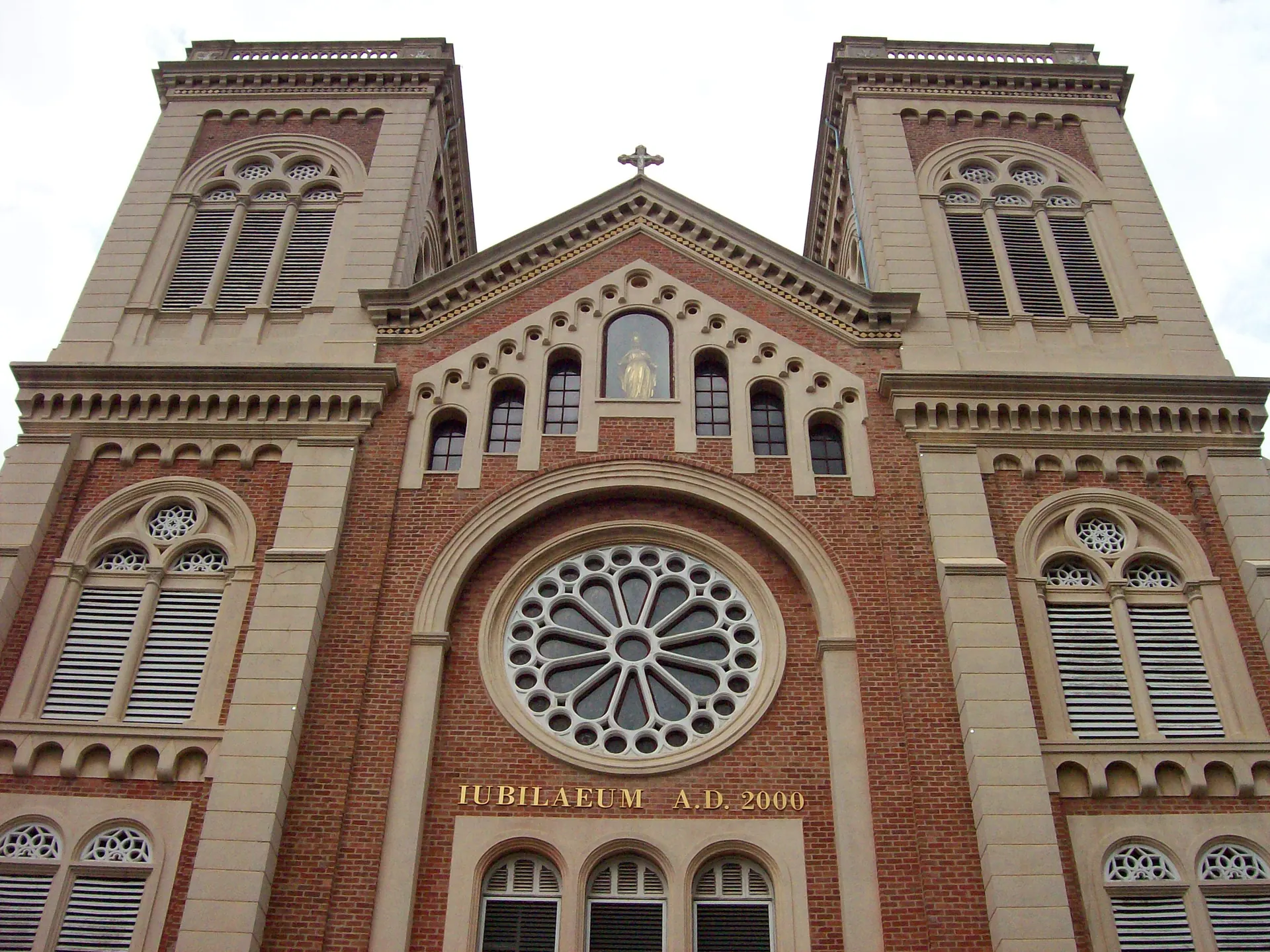
The cathedral is the district’s best-known heritage building and the one most likely to appear on a walking route. It is also an active parish church. The district authority documents it as part of Bang Rak’s heritage; that does not make it an attraction. Services run, and visitors are guests in someone else’s place of worship.
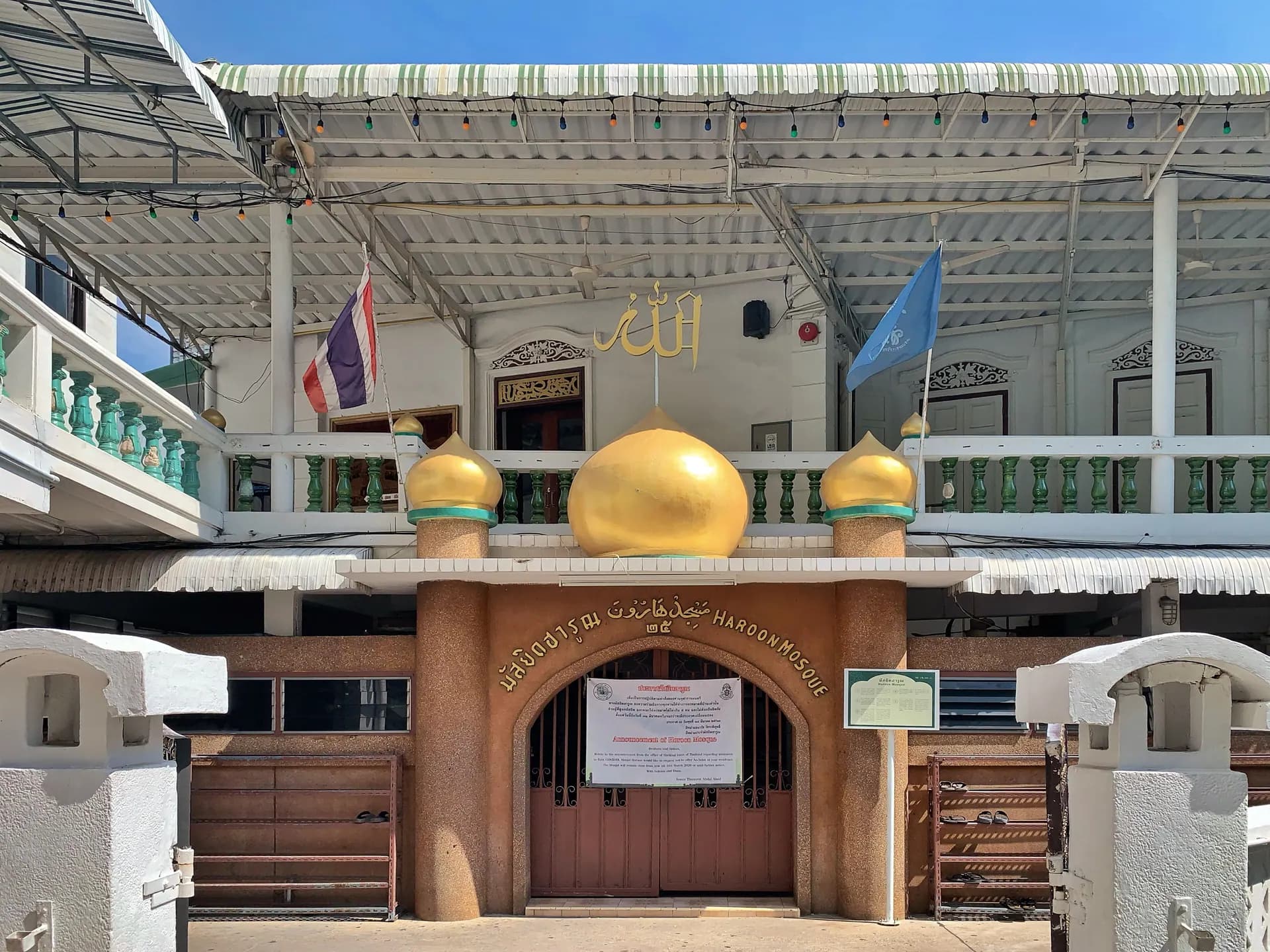
The same applies to the mosque and to the Chinese and Hindu temples nearby. We describe them because they explain the district. We do not schedule them.
Where the record disagrees with itself
Not everything here is settled. The founding date of the district’s mosque is given differently by different published accounts, and we have not found a source we would stand behind for a single year — so we do not print one. An article whose value rests on a documented past should be visibly willing to say where the documentation runs out.
Sources and fact review
Every claim below is traceable to a named source. Items marked volatile — opening hours, fares, routes and exhibition schedules — change without notice and are rechecked before publication rather than presented as permanent.
The district authority’s own account of Bang Rak and of Assumption Cathedral within it.
The tourism authority describes the riverside neighbourhood as historically known for its Chinese and Muslim street food and its high-end hotels, before its recent change of character.
The city publishes the Charoen Krung–Talat Noi corridor as a heritage route, which is the physical extent of the old trading quarter.